Parts of a Compound Bow, From Riser to D-Loop
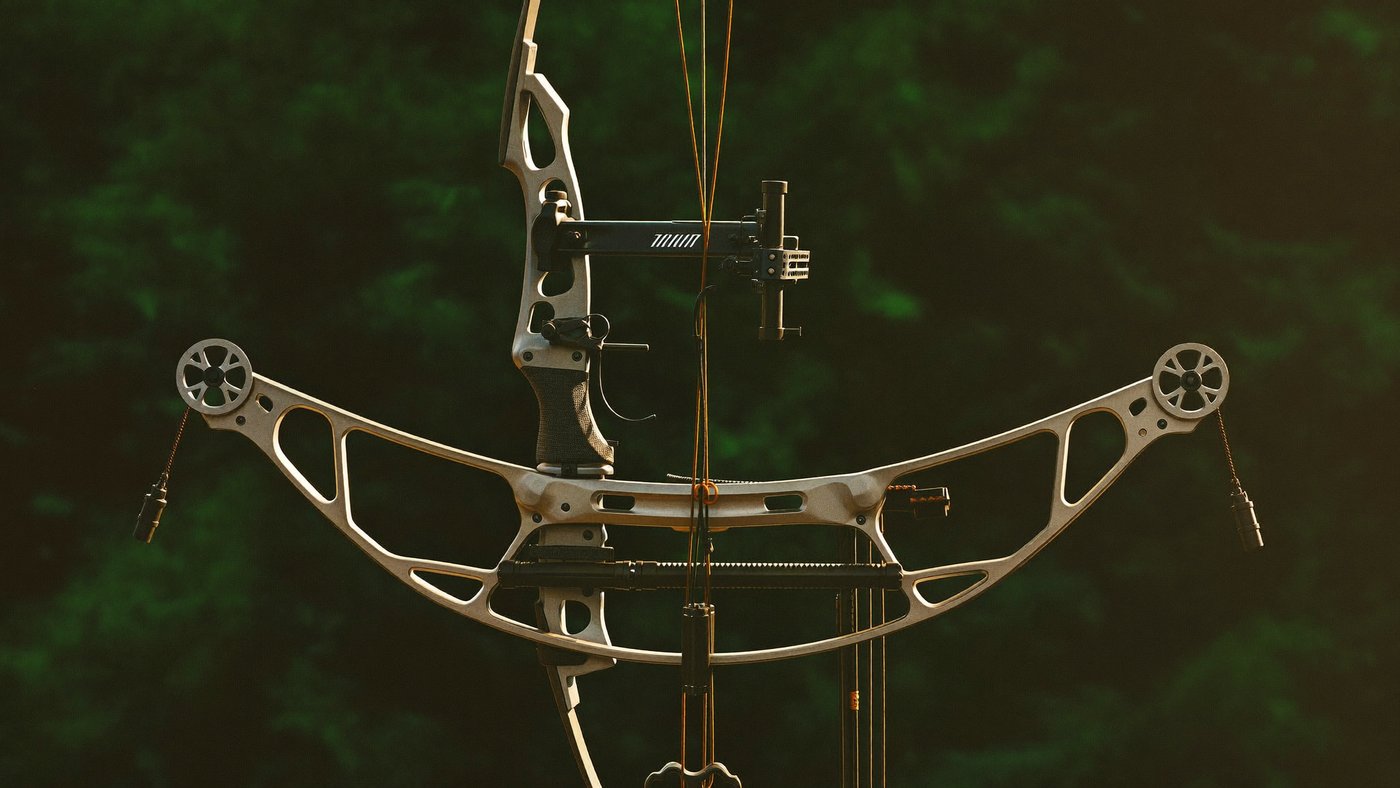
A compound bow has about ten parts that matter: riser, limbs, cams, modules, cables, cable guard, string, peep, D-loop, and draw stops. Here's what each one does — and which ones deserve your money.
By the Archery Care Editorial Team
Watch it done
Reputable tutorials that demonstrate this, hand-picked by Archery Care. The walkthroughs are the creators’ own — we just point you to the good ones (and, where they added chapters, straight to the moment that matters).
Ten parts, more or less, make up a compound bow: the riser you grip, the limbs that store energy, the cams that multiply it, plus cables, a cable guard, the string, and the small stuff — peep sight, D-loop, draw stops. Learn what each one does and pro shop conversations get cheaper fast.
Here's the full tour, top to bottom.
The riser
The riser is the rigid center section — the part you actually hold. Your sight, arrow rest, stabilizer, and quiver all bolt to it. Most risers are machined from aluminum. Carbon versions cut weight and don't pull the heat out of your hand in a November treestand, which is a big part of why a Hoyt Carbon RX-10 costs what it does.
Stiffness here matters more than the brand. A riser that flexes under load bleeds accuracy you'll never buy back with accessories.
Limbs
Think of the limbs as the bow's springs — fiberglass-composite blades bolted to each end of the riser that bend as you draw. All the energy that launches your arrow lives in them, not the string. You'll see solid limbs (one piece) and split limbs (two blades with a gap between them). Most modern hunting bows run near-parallel limb geometry, which sends the limbs in opposite directions at the shot and cancels most of the kick.
Cams and modules
Cams do the trick that defines the category. These machined, egg-shaped wheels at the limb tips change leverage through the draw cycle, so the bow gets harder to pull and then suddenly easier — that drop is let-off. Modern designs advertise 80 to 90 percent, meaning a 70-pound bow holds somewhere between 7 and 14 pounds at full draw. The Mathews ARC 34 offers 80 or 85 percent on its SWX-2 cam.
Three layouts dominate:
- Single cam — one power cam on the bottom limb, a round idler wheel on top. Forgiving to tune, a touch slower.
- Hybrid — a control cam and a power cam working together off shared cables.
- Binary — twin cams slaved to each other. Fast, crisp draw, and what most flagships run.
Modules set your draw length
Bolted onto the cam itself, modules are the small plates that set your draw length — and on some bows, your peak weight too. The ARC 34's mods cover 26.5 to 32 inches of draw and 55 to 80 pounds without a bow press, which is why that bow runs $1,569 instead of less. Get measured before you buy anything. A draw length calculator and your wingspan will get you close; a pro shop will get you exact.
Cables and the cable guard
Look past the string and you'll see two thick cables running between the cams. They keep the system synchronized so both cams roll over together — when they don't, your bow is out of time and your arrows know it before you do.
The cable guard, a rod or roller bracket jutting sideways from the riser, pulls those cables out of the arrow's flight path. Older guards use a Teflon slide; most current bows use rollers. Torn fletchings? Check here first.
The bowstring
Strings take the abuse. They're woven from high-modulus polyethylene fibers — Dyneema and its cousins — and they creep and fray quietly over thousands of shots. Wax yours when it looks fuzzy. Plan on a replacement roughly every three years, sooner if you shoot a lot, because a stretched string shifts your draw length and peep rotation without announcing itself.
Peep sight and D-loop
Two small string-mounted pieces finish the aiming system.
The peep sight is a little ring served between the strands of the string. You look through it to center your sight housing, the way a rifle shooter uses a rear aperture. Set its height for the distance you shoot most often — not your maximum.
The D-loop is a short cord tied around the string at the nocking point. Your release aid clips to the loop instead of the string, which protects the serving and keeps nock travel straight. The material costs pennies. Replace it the moment it looks chewed.
Draw stops and the back wall
At full draw, something has to tell your muscles to quit pulling. That's the draw stop, and it creates what archers call the back wall. Cable stops press against a cable and feel slightly spongy. Limb stops hit the limb directly and feel like concrete. Target shooters mostly want concrete; some hunters prefer a hint of give for awkward treestand angles. Plenty of current cams let you run either.
What the parts tell you about price
One warning before you shop on specs. Advertised speeds come from lab conditions — the ATA standard fires a 350-grain arrow from a 70-pound bow at a 30-inch draw, and the older IBO test allows 80 pounds and a 400-grain arrow. A real hunting setup typically lands around 270 to 285 fps regardless of the sticker.
Across the compounds we've scored, IBO ratings span just 338 to 357 fps while prices run $1,300 to $2,149. That's 19 fps across an $849 gap.
So buy for riser stiffness, cam feel, and the back wall. The speed number is the least interesting part on the bow.
Real questions archers ask about the parts of a compound bow
Mined from public archery communities (June 2026); answered by Archery Care using our scored data. Source links go to the original discussions.
Single cam, dual cam, or hybrid cam, which should a beginner actually care about?
Honestly, less than the marketing suggests. Single cams use one long string and tend to draw smooth and stay easy to tune, which is why they earned a beginner-friendly reputation. True dual (binary) cams are usually a touch faster but want both cams hitting in sync, so they can drift out of tune sooner. Hybrids, sometimes called cam-and-a-half, split the difference: near single-cam tuning ease with more speed. For your first bow, don't chase a cam type. Pick the bow whose draw cycle feels smooth to you, whose back wall feels solid, and that's quiet at the shot. Any modern cam, set up right at a shop, will shoot fine.
Does let-off percentage matter, and should I want 65%, 80%, or 90%?
Let-off is the percentage of peak weight the cams shed once you hit the back wall, so a 70-pound bow at 80% let-off holds around 14 pounds at full draw. Higher let-off means you can hold longer with less shake, which hunters love when an animal won't step clear. The trade-off: target archers often run lower let-off because more holding weight settles the pin and steadies aim, and you give up a sliver of arrow speed at higher let-off. For most people 75 to 80% is the sweet spot. One caveat: some bowhunting regs cap let-off (often at 80%), so check your state before going higher.
What's the difference between cam timing and cam sync, and how do I know mine's off?
People use the terms loosely, but they're not identical. Cam timing is about each cam reaching its rotated position relative to its timing marks; sync is both cams arriving at the back wall and hitting their draw stops at the exact same instant. On a two-cam bow this matters a lot. If one cam slams its stop before the other, you get a short, mushy valley, a weak back wall, and the string nocking point bobbing during the shot, which throws off vertical groups. The classic check: draw the bow (carefully, on a board or with a draw board) and watch both stops. Whichever hits first needs a twist added to its cable. If that sounds dicey, a pro shop with a press sorts it in minutes.
My peep sight doesn't line up at full draw, what's actually wrong?
Your peep rotates because the bowstring untwists slightly under load and the peep follows it. The fix is usually string twists, not a new peep. Start at brace height and add or remove twists at the top string loop until the peep faces you square, then draw and check. Fine-tuning is easiest with a string silencer added above the peep, sliding it up or down nudges rotation a hair without a press. You can also rotate the D-loop a little to bring things in line. New strings are the worst offenders: they settle and creep for the first hundred-odd shots, so don't lock everything in on day one or you'll be chasing it. A shop can flip or re-serve the peep if it's badly off.
Beyond the parts list, what specs make a bow more forgiving for a first-timer?
Two numbers do most of the heavy lifting: axle-to-axle length and brace height. ATA is the distance between the cam axles; longer is steadier and harder to torque, so aim for 32 inches or more. Brace height is the gap from the string to the grip's deepest point; more brace height means the arrow leaves the string sooner, which hides small form errors. Shoot for around 6.5 to 7 inches unless your draw is quite short. Short, fast bows feel sexy on paper but punish sloppy form. There's also a real risk shops set draw length too long, which wrecks your anchor, so be a touch short rather than long, and get fitted in person.
Community Pulse
What owners and shoppers actually say, quantified across 6 public discussions reviewed in June 2026.
Single-cam bows are the smart, low-hassle choice for beginners
mixedThere's a long-standing belief that single cams are the beginner-friendly pick because they draw smooth, tune easily, and cost less to restring. Plenty of shooters still back that. But the counter-view has grown: modern hybrids tune nearly as simply while shooting faster, and most folks argue cam type matters far less than how a given bow feels to you. The practical consensus is to pick on draw feel and quietness, not the cam badge.
Higher let-off is worth it for the easier hold
mixedHunters tend to favor 80% or higher let-off because holding longer with less weight helps when waiting on a shot. Target-leaning shooters push back, pointing out that more holding weight steadies the pin and that the speed and accuracy trade-offs are real, if small. At typical hunting weights the difference in pounds held is only a few, so many land on 75 to 80% as the compromise, with a reminder to check local let-off regulations.
Cam timing and sync are DIY jobs you can learn
mixedSome experienced shooters happily check sync at full draw and add cable twists themselves, treating it as basic maintenance. Others warn that without a bow press and a solid grasp of which cable to twist, it's easy to make timing worse, and they steer beginners straight to a pro shop. Both camps agree on why it matters: out-of-sync cams give a weak back wall, a short valley, and vertical nock travel that hurts groups.
How we counted: we read 6 public discussions across archery forums and communities, grouped recurring topics, and counted distinct threads (not comments) where each theme appeared favorably or critically. Summaries are paraphrased in our own words; every count links to its sources. Note: Discussion concentrates on ArcheryTalk's gear/setup subforums, with Rokslide adding the hunting-context angle on let-off and draw length. Cam-type and cam-timing debates are the most active and recurring.