How-To Guides
Everything you need to start shooting well and make smart gear decisions — written for real beginners and improving archers.
How to Choose the Right Draw Weight for Your Bow
Beginners get draw weight wrong more than any other spec. Here's the hold test, starter bands, and why Olympic recurve has no required poundage — only what you can hold.
Read guide
How to Measure Your Draw Length (3 Accurate Methods)
Get your draw length wrong and nothing else matters. Three ways to find it — a quick estimate, a wall trick, and the pro-shop measurement that settles it.
Read guide
How to Tune a Compound Bow (Paper, Walk-Back & Bare-Shaft)
A logical, step-by-step sequence to get your compound bow throwing darts — including a troubleshooting guide to reading paper tears.
Read guide
Recurve vs Compound: Which Bow Should You Start With?
Recurve or compound? Neither is "better." The right pick comes down to your goals, your budget, and the kind of archery you actually want to do.
Read guide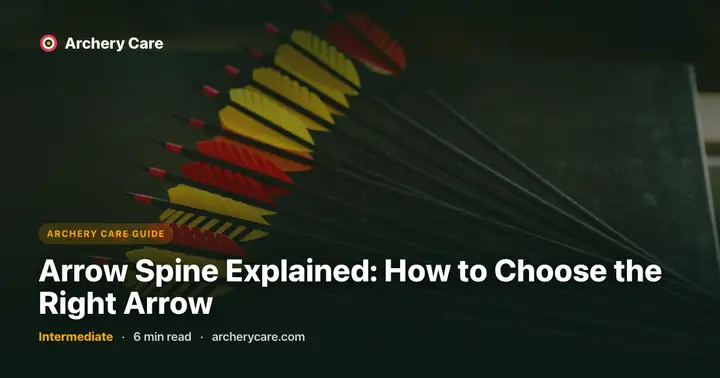
Arrow Spine Explained: How to Choose the Right Arrow
Static vs dynamic spine, how to read a spine chart, and how length and point weight change everything. Get this right and your groups shrink.
Read guide
How to Aim a Bow: Sight, Gap & Instinctive Shooting
Sights, gaps, or pure instinct — how the three aiming systems actually differ, plus the dominant-eye test and why your anchor point comes before any of them.
Read guide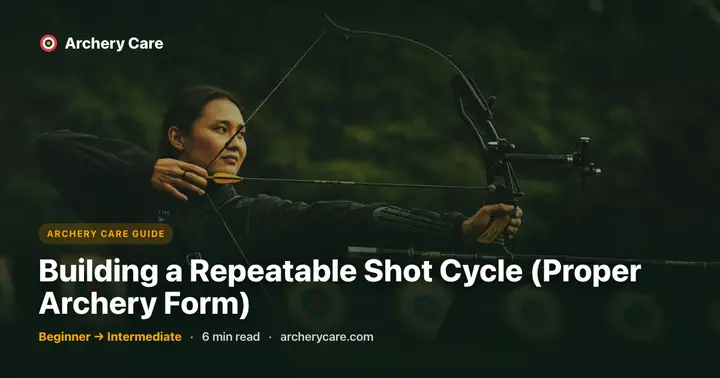
Building a Repeatable Shot Cycle (Proper Archery Form)
Every good shot is the same shot. Break your cycle into ten repeatable steps — stance through follow-through — and run the drills that fix the usual faults.
Read guide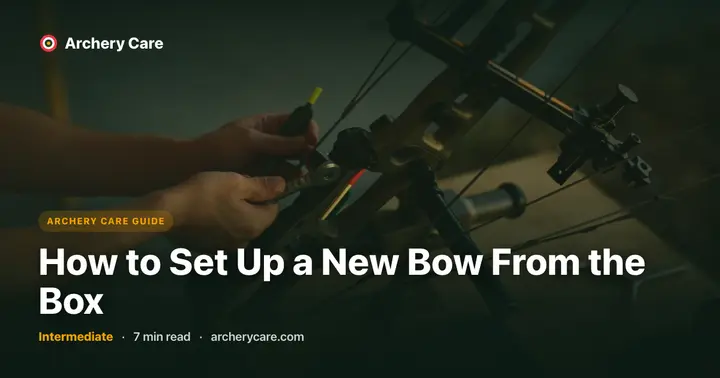
How to Set Up a New Bow From the Box
Installing a rest, sight, stabiliser, peep and D-loop, then setting nocking point and centershot — and knowing when to visit a pro shop.
Read guide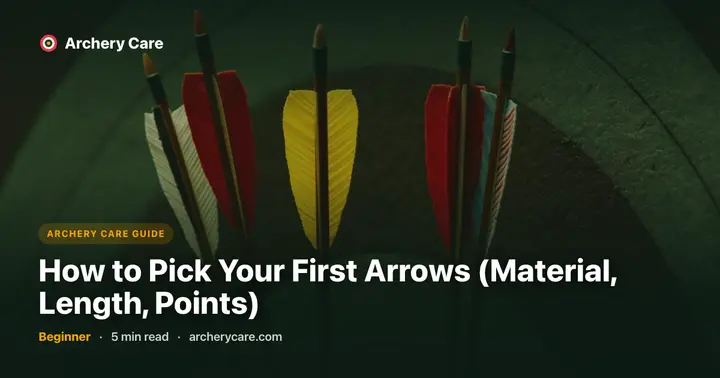
How to Pick Your First Arrows (Material, Length, Points)
Material comparison, correct arrow length, point weight and the safety rules every new archer must know before buying shafts.
Read guide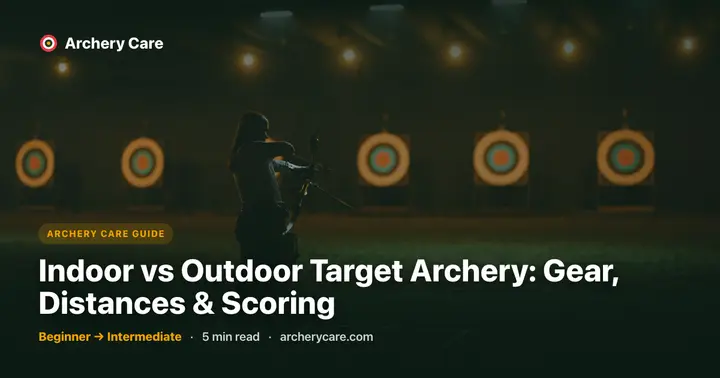
Indoor vs Outdoor Target Archery: Gear, Distances & Scoring
Indoor and outdoor target archery are close to separate sports — different distances, different faces, different scoring, and arrows you might swap entirely between seasons. Here's what changes.
Read guide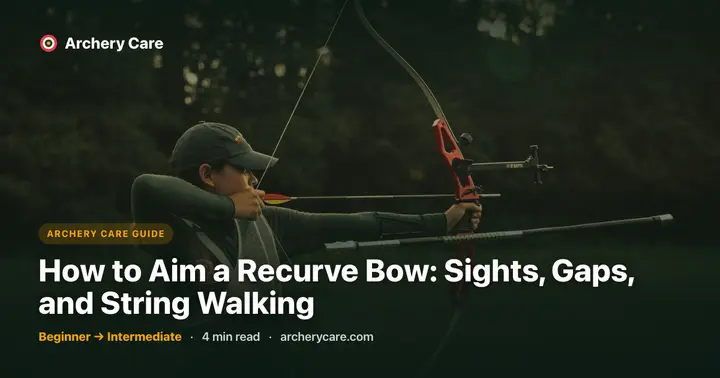
How to Aim a Recurve Bow: Sights, Gaps, and String Walking
There are four ways to aim a recurve: a sight, gap shooting off the arrow tip, string walking, or instinctive shooting. Whichever you pick, a repeatable anchor point matters more than the method itself.
Read guide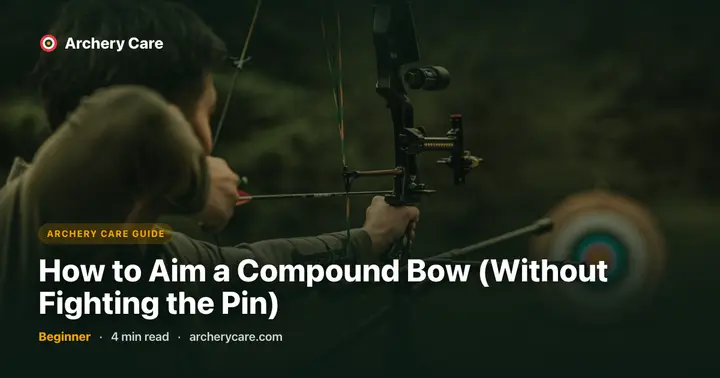
How to Aim a Compound Bow (Without Fighting the Pin)
Center your sight housing inside the peep, settle the pin on the spot, and let it float while you pull through the shot. Here's how to set up the peep, pick between single-pin and multi-pin sights, and stop target panic before it starts.
Read guide
How to String a Recurve Bow Without Wrecking It
Use a bow stringer every time — it's the only method bow manufacturers recommend. Hand methods exist, but they load limbs unevenly. Here's the safe stringer walkthrough, unstringing, twists, and when a string is finished.
Read guide
Parts of a Recurve Bow: Every Piece, Named and Explained
A recurve bow is three pieces — a rigid riser and two flexible limbs — plus a string. Here's what every part does, from the plunger hole to the ILF dovetail, and which ones actually matter when you buy.
Read guide
Parts of a Compound Bow, From Riser to D-Loop
A compound bow has about ten parts that matter: riser, limbs, cams, modules, cables, cable guard, string, peep, D-loop, and draw stops. Here's what each one does — and which ones deserve your money.
Read guide
What Size Recurve Bow Do You Need? Draw Length Decides
Match bow length to draw length — 66 inches for a 25-27 inch draw, 68 for 27-29, 70 for 29 and up — then buy a string by the same AMO marking and set brace height inside the standard range for your length.
Read guide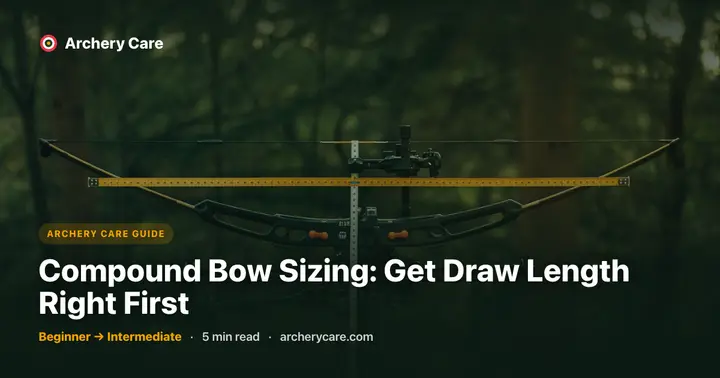
Compound Bow Sizing: Get Draw Length Right First
Compound bow fit starts with one number: your draw length, which is your wingspan divided by 2.5. Get that right, then choose axle-to-axle length by how you'll use the bow, weigh it rigged rather than bare, and let your dominant eye — not your dominant hand — decide left or right.
Read guide
Are Compound Bows Allowed in the Olympics? Yes, From LA28
Not historically — every Olympic archery medal since 1972 has been won with a recurve. That changes at Los Angeles 2028, where a compound mixed team event debuts as the first archery medal of the Games.
Read guide
Types of Bows: The 4 Families and How to Pick Yours
Every bow on the market falls into one of four families — recurve, compound, longbow/traditional, and crossbow. Here's what each does best, where compound cam systems differ, and which family actually fits you.
Read guide
Types of Archery: 7 Disciplines and How to Try Each One
Archery isn't one sport — it's seven: target, field, 3D, traditional, bowhunting, flight, and para, each with its own targets, distances, and governing bodies. Here's what every discipline actually asks of you, and the cheapest way to try each one this month.
Read guide
What Is 3D Archery? Scoring, Classes, and Your First Shoot
3D archery means shooting one arrow per target at life-size foam animals along a walking course, scored on rings worth 12/10/8/5 (ASA) or 11/10/8/5 (IBO). Here's how the rings, classes, and tournaments actually work — and how to find a shoot near you.
Read guide
Archery Safety Rules: Range Commands, Gear Checks, Dry Fire
Nearly every archery accident traces to one of three things: someone downrange, a bow fired without an arrow, or gear that was visibly failing before the shot. Here's how to control all three — whistle commands, inspection habits, and the injuries worth preventing.
Read guide
Benefits of Archery: Real Strength, Focus and Calm
Archery builds upper-back strength, balance and sustained focus at about 4.3 METs of effort — real benefits, honestly sized. Here's what the sport does for your body, your head and your weekends, and what it won't.
Read guide
How Many Calories Does Archery Burn? Real Numbers
Target archery burns roughly 100-150 calories per 30 minutes for a 120-160 lb adult, based on its 4.3 MET rating — the same energy cost as walking a golf course carrying your clubs. Field and 3D archery can roughly double that.
Read guide
How Fast Does a Compound Bow Shoot? The Honest Numbers
Flagship hunting compounds rate 330-360 fps under standardized testing, but a real hunting setup shoots 270-300 fps. Here's where the speed goes — and why the gap isn't false advertising.
Read guide
How Far Can a Bow Shoot? Records vs Real-World Range
The all-time record arrow flight is 2,047 yards from a crossbow, but real-world range is far shorter: 20-60 yards for ethical hunting shots and 18-70 meters in sanctioned competition.
Read guide
How to Tune a Recurve Bow: The Six-Step Sequence
Tune a recurve in a fixed order — brace height, nocking point, centershot and plunger, tiller, limb alignment, then bare shaft testing. Each setting builds on the one before it, and skipping ahead means tuning a moving target.
Read guide
How to Increase Draw Weight Without Wrecking Your Shoulders
Build draw weight with SPT holds, band volume, and rowing work in the gym — then move up 2 lb at a time, giving each jump four to eight weeks. Overbowing costs you accuracy now and a shoulder later.
Read guide
Bow Hunting for Beginners: Your First Season, Step by Step
Your first bow season comes down to four boxes: get legal, get a bow you can actually draw, prove every-arrow accuracy at a known distance, and stay tethered in the tree. Here's the roadmap from hunter ed to opening day.
Read guide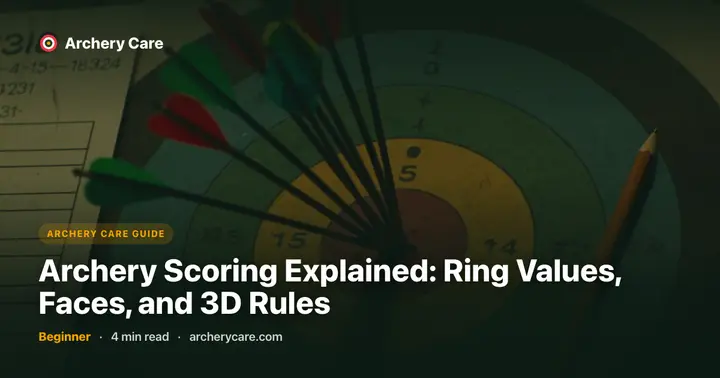
Archery Scoring Explained: Ring Values, Faces, and 3D Rules
A bullseye scores 10 points on World Archery target faces, with rings counting down to 1 and the inner X-ring breaking ties. Here's how indoor, outdoor, and 3D scoring actually work.
Read guide
How to Set Up a Recurve Bow, Step by Step
A takedown recurve goes from box to first arrow in about an hour: bolt on the limbs, string it with a stringer, set brace height (roughly 7-9.5 inches depending on bow length), stick on a rest, and tie a nocking point 1/4 to 3/8 inch above square.
Read guide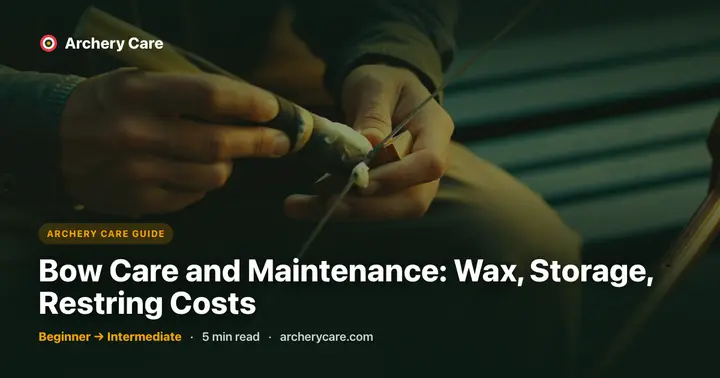
Bow Care and Maintenance: Wax, Storage, Restring Costs
Three habits cover it: wax the string every two to four weeks, keep the bow dry and temperature-stable, and budget $20-$150 for new strings every two to three years. That's enough to keep most bows shooting well for 15-plus years.
Read guide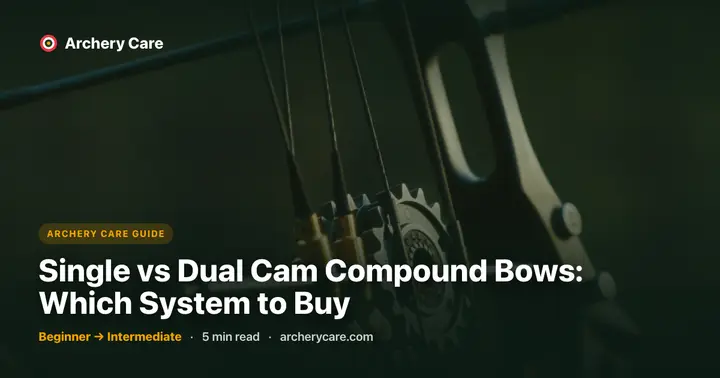
Single vs Dual Cam Compound Bows: Which System to Buy
Buy a binary or hybrid cam bow unless you have a specific reason not to — they deliver twin-cam speed without the timing maintenance, which is why nearly every current flagship uses one. Here's how all four systems actually differ.
Read guide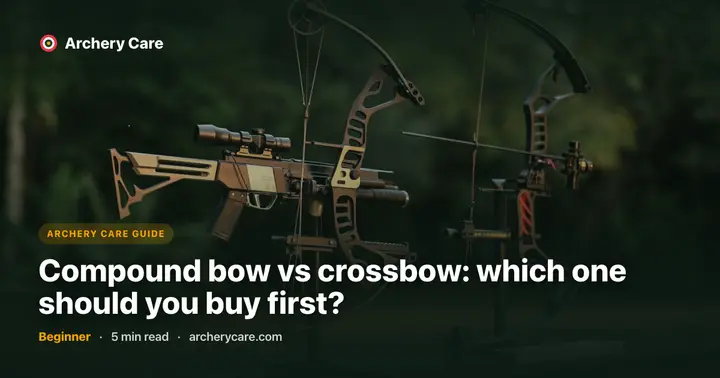
Compound bow vs crossbow: which one should you buy first?
Crossbows are faster (360-515 fps vs 338-357 fps IBO in our scored catalog) and far easier to learn; compounds are legal in every archery season and more satisfying to own. Here's the honest split on learning curve, speed, legality, and cost.
Read guide
Recurve Bow vs Crossbow: Skill Project or Hunting Tool?
A recurve is a lifelong skill with a $150 entry price; a crossbow shoots like a rifle and costs ten times more to start. The right pick depends on whether you want to compete someday or fill a tag this fall.
Read guide
How to Sell a Compound Bow (and Get What It's Worth)
Where to sell a used compound bow, how to price it so it actually moves, how to ship it safely, and the scams to watch for.
Read guide
Can a Compound Bow Shoot Steel Balls? Here's the Honest Answer
No, a real compound bow doesn't shoot steel balls — but there's a whole class of repeating crossbows people mean when they search for one. Here's what actually exists, and one safety catch worth knowing.
Read guide
How to Make a Wood Longbow (A Realistic First Build)
Build a shootable 40 lb longbow from a hardware-store board. What wood to buy, how to read grain, and how tillering actually works.
Read guide
How to Make an English Longbow (Yew, D-Section and Warbow Reality)
What separates a true English longbow from a generic wooden bow — the D-section, yew's two-wood trick, and why the historical draw weights are so brutal.
Read guide
The History of the Longbow: Crécy, Agincourt and the Mary Rose
How a simple stave of yew decided medieval battles, why England legislated archery practice, and what 137 bows raised from a sunken warship told us.
Read guide
How to Paint a Compound Bow Without Wrecking It
What to mask, which paint survives a bow's flex and solvents, and the two things that will void your warranty or ruin your tune.
Read guide
Recurve Bow Brace Height Chart (and How to Tune Yours)
The standard brace height ranges for every recurve length from 58 to 72 inches, how to measure yours, and how to tune inside the window by twisting the string.
Read guide
Recurve Bow String Length: The 4-Inch Rule (with Chart)
String length isn't bow length — it's shorter by a rule. The AMO standard explained, a length chart for every bow size, and how to measure a string you already own.
Read guide
What Size Longbow Do You Need? (Draw Length Chart)
Size a longbow from your draw length, not your height. The chart, the wingspan method, and why a too-short longbow 'stacks' into a wall of resistance.
Read guide
How to Shoot a Longbow (Instinctive Form, Step by Step)
Longbow form is its own discipline: cant the bow, shoot off your knuckle or a small shelf, and learn instinctive or gap aiming instead of sights.
Read guide
Best Recurve Bow Brands: Who Actually Makes What (2026)
The recurve brand landscape, sorted by what you're buying for — Olympic lines, workhorse trainers, budget ILF, and traditional hunting bows — with honest notes on each.
Read guide
How to String a Compound Bow (Why You Need a Press)
Compound bows can't be strung like a recurve — the cams and cables hold the limbs under preload. What a bow press does, when a portable press works, and the one older-bow exception.
Read guide
Archery Terms: The Complete Glossary (Plain-English Definitions)
Every archery term you'll actually encounter — bows, gear, hunting, technique, scoring — defined in plain English, with an A–Z jump so you can find a word without scrolling.
Read guide
How to Start Archery: The First 90 Days, Honestly
The realistic path from never-shot to competent: your first lesson, what to buy (and not buy), what it costs, and the 90-day plan that skips the common mistakes.
Read guide
How to Build a Backyard Archery Range (Safe, Legal, Cheap)
Distance, backstops, legality and target choice — how to set up a backyard range that's genuinely safe, neighbor-proof, and costs less than a flagship sight.
Read guide
Bow String Wax: When, Why, and How (2-Minute Job)
The cheapest maintenance in archery: what string wax actually does, how often to use it, the fuzz test, and the mistakes that shorten string life.
Read guide
Olympic Archery Rules & Scoring, Explained Simply
How Olympic archery actually works — the distance, the target, the ring values, and the set-point match system that decides medals. No jargon, just how the sport is won.
Read guide
Olympic Archery Equipment: The Complete Recurve Kit
Every piece an Olympic recurve archer shoots — riser, limbs, sight, clicker, stabilizers, plunger, tab — what each does, and what it costs to build the setup.
Read guide
What Is a Shortbow? (And How It Differs From a Longbow)
A shortbow is simply a bow shorter than a longbow — but that difference shaped cavalry, hunting, and half the fantasy games you've played. Here's the real story.
Read guide
Longbow Care & Setup: Stringing, Storing, and Traveling
A traditional longbow rewards care and punishes neglect. How to string it without twisting the limbs, store it so it keeps its cast, and travel with it safely.
Read guide