How to Aim a Compound Bow (Without Fighting the Pin)
Center your sight housing inside the peep, settle the pin on the spot, and let it float while you pull through the shot. Here's how to set up the peep, pick between single-pin and multi-pin sights, and stop target panic before it starts.
By the Archery Care Editorial Team
Watch it done
Reputable tutorials that demonstrate this, hand-picked by Archery Care. The walkthroughs are the creators’ own — we just point you to the good ones (and, where they added chapters, straight to the moment that matters).
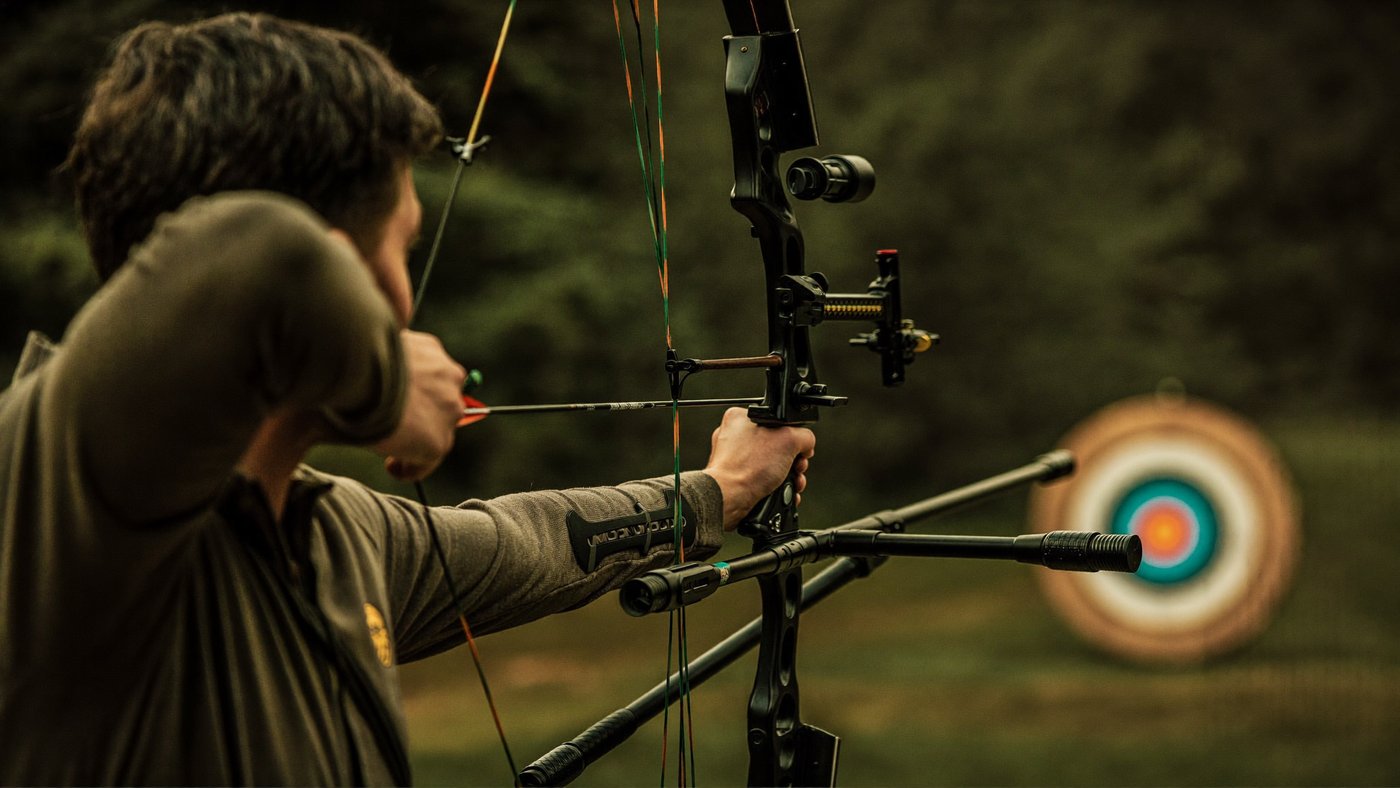
Aiming a compound bow means stacking three circles: the peep sight on your string, the sight housing on your riser, and the target behind your pin. Center the housing inside the peep, settle the pin on the spot, and pull through the shot while the pin drifts. That's the whole system.
The hard part isn't learning it. It's resisting the urge to fight it.
One caveat before the gear talk: none of this works if the bow doesn't fit you. If you're stretching to find your anchor point, sort your draw length first — a draw length calculator takes two minutes and fixes more aiming problems than any sight upgrade.
Patience beats intensity here. Archers who try to out-shoot target panic with more arrows at more targets usually dig the hole deeper.
Get the peep dialed first
Your peep is the rear sight — a small ring served into the bowstring that you look through at full draw. Peeps cost under $10, and the size matters more than the brand. Three diameters cover nearly everyone: 1/8 inch, 3/16 inch, and 1/4 inch.
Go 3/16 unless you have a reason not to. It's the standard because it pairs with most sight housings and splits the difference between precision and brightness. Smaller peeps sharpen the picture but go dim at dusk; a 1/4 inch buys you those last minutes of legal shooting light at the cost of some exactness. Sight housings under 1.75 inches across work best with a 3/16 peep or smaller, while 2-inch housings want the 1/4.
Alignment is the actual trick. At full draw, the round housing should sit centered inside the round peep — concentric circles with a thin halo of daylight around the housing. Your eye centers circles automatically, which is exactly why the setup works.
Test the placement like this: close your eyes, draw, anchor, open. If the peep isn't already sitting centered over the housing, move the peep on the string. Never chase it with your face.
Single pin or multi-pin
Multi-pin sights run three, five, or seven fixed pins, usually gapped in 10-yard steps — 20, 30, 40, 50, 60. Nothing to adjust at the moment of truth. The cost is clutter: more pins means a busier window, and under pressure people grab the wrong one. You're also guessing the gap when a deer stands at 37 yards.
A single-pin slider flips the trade. One pin, dialed to the exact distance, with a clean open sight picture. But dialing takes time and movement, and if the animal walks from 40 to 55 while you're at full draw, you're improvising.
Pick by how you shoot. Treestand whitetail inside 30 yards: single pin or a simple three-pin. Open country where distances change fast: five fixed pins. Target archers almost always land on a single pin eventually.
Pin diameter is its own decision. A .019-inch pin is the hunting default; .010 pins look surgical on a target face but vanish in low light. And the sight question rides along with any bow purchase — it applies the same whether the sight's bolted to a Bear Redeem or a Hoyt Carbon RX-10.
The bubble level isn't decoration
That little vial at the bottom of your sight housing exists because canting — tilting the bow off vertical — pushes arrows left or right, and the error grows with distance. On flat ground at 20 yards you might never notice. On a steep downhill shot at 50, you will.
Glance at the bubble as you settle in. One beat. It becomes automatic within a few weeks.
Worth knowing: the level only tells the truth if your sight's second and third axes are set correctly, and most archers never touch them. A pro shop can square them up in minutes. Do it before you trust the bubble on angled shots.
Let the pin float
Watch your pin at full draw and you'll notice it never stops moving. It drifts. Loops lazily around the spot, slides off, comes back. That's normal — that's everyone.
The mistake is fighting it. Muscling the pin dead-still builds tension, and tension makes the float bigger, not smaller. The worse mistake is timing it — punching the trigger the instant the pin crosses center. That habit feels productive and quietly wrecks your shooting.
So accept the wobble. Hold the pin loosely over the spot, keep pulling through the release, and let the shot break while the pin floats. Arrows funnel toward the middle of wherever the pin spends its time, and the float shrinks on its own as your holding muscles strengthen. The first couple of weeks, your shoulders will let you know about it.
Target panic, caught early
Target panic is what happens when wanting the middle turns into fear of the middle. Symptoms range from quietly rushing your shot routine to freezing, unable to hold the pin on target — and in bad cases, being unable to reach full draw at all.
It's common and it's fixable, and the fix is mostly taking aiming out of the equation for a while:
- Shoot a blank bale — a target butt with no face on it — from a few feet away, focused entirely on form and a smooth release
- Move to big targets up close, so your brain relearns that holding center is safe
- Open up the sight picture: a larger ring, or removing the pin's bright dot, cuts the visual pressure
- Alternate blank-bale sessions with scored sessions instead of grinding targets every day
Put it together
Set the peep, pick the sight style that matches how you hunt, square the level, then spend your range time on the boring part: floating the pin and pulling through. Gear gets you aligned. Reps make you accurate.
Real questions archers ask about aiming a compound bow
Mined from public archery communities (June 2026); answered by Archery Care using our scored data. Source links go to the original discussions.
I'm right-handed but left-eye dominant — how do I aim a compound bow?
You've got two honest options, and which one you pick mostly depends on how new you are. If you're just starting out, the cleanest fix is to buy a left-handed bow and shoot off your dominant left eye. It feels backwards for a week, then it doesn't. If you're already committed to a right-handed setup, train your right eye to do the aiming: close or squint the left eye at full draw to find the peep, then settle into your shot. Cross-dominance isn't a dealbreaker — plenty of shooters manage it — but fighting it with a peep sight in low light is miserable. Sort it before you build a thousand reps on the wrong eye.
Should I aim with both eyes open or one eye closed?
Both eyes open is what most experienced shooters land on, and it's worth working toward. You get more light into the peep, better depth perception, and your face muscles stay relaxed instead of clenched around a squint — which steadies the pin. The catch is cross-dominance: if your off eye keeps stealing the picture, both-eyes-open turns into a fight. A solid middle path is to close one eye to center the peep in your sight housing, then open the second eye as you move to the trigger and shift focus to the target. Don't force it overnight. Shoot a few sessions each way and keep whichever puts arrows in the middle.
Why does my pin always settle low — below where I'm trying to aim?
Settling low is usually a draw-length or shoulder issue, not bad aim. If you can raise the pin to a target above the bull but can't nudge it that last quarter-inch onto center, that's your brain flinching — early target panic, treat it as such. If the pin just parks low everywhere, look at your form: a bow arm that's dropping, a draw length a touch long, or a high anchor will all leave you hunting upward. A useful trick is to approach from below — let the pin float up into the spot rather than dropping down onto it. Coming up onto the target is far easier to control than fighting gravity down.
Does aiming actually change between a single pin and a multi-pin sight?
The aiming mechanics are identical — float the pin, hold the right spot, let the shot break. What changes is decision-making under pressure. A single pin gives you a clean, uncluttered picture and exact yardage, but you have to dial it and remember where it's set, which bites people who get an unexpected close shot. A multi-pin lets you gap-shoot between pins instantly — hold a hair high or low and send it — no dialing required. Tight shooting lanes where 30 yards is a long poke? Single pin's lovely. Shots that could land anywhere from 5 to 40? Most hunters keep a multi-pin or a slider with extra fixed pins so they're never caught mid-adjustment.
How long should I hold on target before I shoot — and what if my pin gets shakier the longer I aim?
Most good shots break inside the first 5 to 10 seconds of the pin settling, and there's a physical reason for that. The fine muscles that steady your pin are small and tire fast — they're calmest in those first few seconds, then the wobble grows. So don't grind. Draw, let the pin float onto the spot, and execute while you're fresh. If the float opens up into ugly vibration, you've held too long: let down, breathe, redraw. Forcing a shot off a tired, shaking pin only trains a flinch. The goal isn't a marathon hold — it's a smooth shot delivered before the steadiness drains away.
Community Pulse
What owners and shoppers actually say, quantified across 6 public discussions reviewed in June 2026.
You should stop trying to hold the pin still and let it float instead
praiseThis is the closest thing to settled doctrine across both forums. Shooters repeatedly warn that forcing the pin onto center tenses the bow arm and turns a small, manageable wobble into real vibration. The advice is consistent: accept the float, pick a relaxed pattern or let the pin choose its own, focus on the spot rather than the pin, and let a surprise release happen. Nobody seriously argued for white-knuckling the pin still.
Single pin is the better choice for hunting
mixedGenuinely split. Single-pin fans love the clean sight picture, exact yardage, and lack of clutter when adrenaline hits. The pushback is just as practical: you can forget where the pin's dialed and shoot over or under a surprise close shot. Multi-pin and slider users counter that gap-shooting between pins is fast and forgiving when range is unknown. Consensus lands on hunting style — tight lanes favor single, variable-distance country favors multi.
A wobbly or choppy pin float is a setup problem, not just a skill problem
mixedMany shooters tie float quality to fit: quick, choppy movement often points to a draw length that's too short, while wide, loopy float suggests it's too long. Others push back that float is mostly conditioning and shot execution — lock the bow shoulder, pull through with back tension, and the pin calms regardless of gear. The reasonable takeaway is to rule out draw length and anchor first, then build the holding muscles.
How we counted: we read 6 public discussions across archery forums and communities, grouped recurring topics, and counted distinct threads (not comments) where each theme appeared favorably or critically. Summaries are paraphrased in our own words; every count links to its sources. Note: Discussion concentrates on ArcheryTalk for sight-picture, eye-dominance, and single-vs-multi-pin debates; Rokslide owns the hunting-context float and settle-low threads. Reddit was excluded per instructions.