How to Shoot a Longbow (Instinctive Form, Step by Step)
Longbow form is its own discipline: cant the bow, shoot off your knuckle or a small shelf, and learn instinctive or gap aiming instead of sights.
By the Archery Care Editorial Team
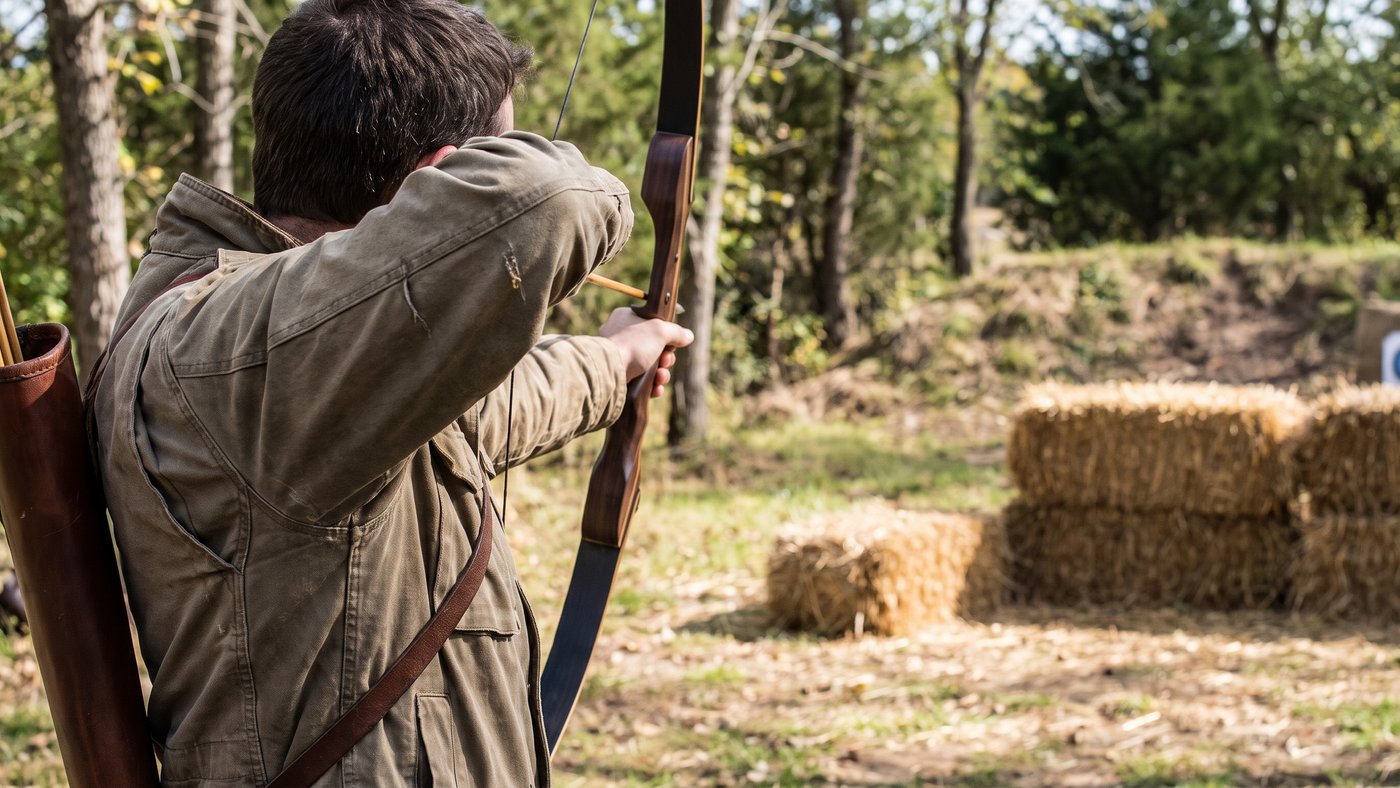
A longbow strips archery to its bones. No sight, no rest, no stabilizers, often not even an arrow shelf — just you, a stick, and a string. That's exactly why longbow shooters get addicted, and why compound form only half-transfers. Here's the whole shot, in order.
- 1
Stance and cant
Stand at a slight angle to the target, feet shoulder-width, weight even. Now the signature move: cant the bow — tip the top limb a few degrees toward the target side, like a clock hand at one o'clock.
The cant isn't style. With no raised rest, the arrow lies on your hand or a small shelf, and canting uses gravity to hold it there. It also clears the string path and opens your sight picture down the arrow.
- 2
Grip low and soft
A longbow grip is a straight handle, not a sculpted pistol grip. Set the handle in the meat of your thumb pad, along the lifeline, and keep the knuckles at roughly 45 degrees. Hold it like a bird: firm enough it can't fly off, soft enough you don't strangle it.
Keep a slight bend in your bow arm. A locked elbow rotates the forearm into the string's path, and one string slap will teach you this lesson more memorably than I can.
- 3
Nock and hook the string
Nock the arrow under your nocking point, cock feather out (away from the bow). Then choose your string hand:
- Split-finger (Mediterranean): index above the nock, middle and ring below. The traditional default — it tillers most longbows correctly and suits instinctive aiming.
- Three-under: all three fingers below the nock. Brings the arrow closer to your eye, which helps gap shooters — common among modern trad archers, less traditional.
- Hook the string in the first joint of the fingers, not the fingertips, and keep the back of the hand flat and relaxed.
- 4
Draw and anchor
Push the bow and pull the string in one motion, drawing with your back muscles — the feeling is your shoulder blades sliding toward each other, not your arm curling a dumbbell. Longbow shooters draw and shoot in a more continuous rhythm than target recurve archers; the bow doesn't love being held at full draw, and neither does instinct.
Anchor somewhere on your face that you can find blind, every time. The classic trad anchor is the middle finger to the corner of the mouth. Higher anchors (index to canine tooth) tighten your gaps. Pick one, never move it.
- 5
Aim: instinctive or gap
There's no sight, so you aim with one of two systems:
- Instinctive: eyes lock hard on the exact spot — a hair, a tuft, never 'the deer' — and you let thousands of repetitions calibrate the shot, the way you throw a ball without aiming it. Slow to build, lethal inside 20 yards, and the purest fit for a longbow.
- Gap shooting: you consciously use the arrow point as a reference — at 15 yards hold the point 18 inches under the spot, at 25 yards maybe 8, learning your personal gaps at each distance. Faster to learn, more precise at distance, slightly slower to execute.
Honest advice: start instinctive at close range to build the shot, then learn your gaps once your form settles. Most seasoned trad shooters end up with a blend whether they admit it or not.
- 6
Release and follow through
Don't open your fingers — relax them. The string leaves on its own, and your string hand should drift back along your jaw toward your ear. That backward drift is proof you were pulling with your back at the moment of release.
Keep your bow arm up and your eyes on the spot until the arrow hits. Dropping the bow to watch the shot is the most common longbow flaw, and it starts happening before the arrow leaves.
- 7
Practice like a trad archer
Ten yards, big target, no pressure. Shoot three-arrow ends focusing on one thing at a time — anchor, back tension, follow-through — and only step back to 15, then 20, when groups hold. Blank-bale practice (eyes closed, three feet from the butt, pure form) is boring and it builds more longbow skill per week than anything else you can do.
Twenty good arrows beat two hundred sloppy ones. The longbow keeps score of which kind you shoot.