Longbow Care & Setup: Stringing, Storing, and Traveling
A traditional longbow rewards care and punishes neglect. How to string it without twisting the limbs, store it so it keeps its cast, and travel with it safely.
By the Archery Care Editorial Team
A wood longbow is a living thing — it flexes tens of thousands of times, and how you treat it between shots decides whether it keeps its snap for decades or takes a permanent set in a season. None of this is hard. It's just a handful of habits that separate a bow that lasts a lifetime from one that follows the string within a year.
- 1
String it with a stringer, always
Use a bow stringer. Full stop. The old 'step-through' method — leg between bow and string, heave — twists the limbs unevenly and is how good longbows get ruined. A stringer is a cord with two leather cups, costs about ten dollars, and puts even pressure on both limbs.
- Cup the two ends of the stringer over the limb tips (the big cup on the lower limb, small cup or pocket on the upper).
- Step on the stringer cord with both feet, pull the riser straight up.
- As the limbs bend evenly, slide the string loop up into its groove. Check it's fully seated in both nocks before you relax.
- Ease the bow down slowly. Never let it snap.
- 2
Unstring it after every session
This is the rule most new longbow owners skip, and it's the one that matters most. A traditional wood longbow left strung slowly takes a 'set' — the limbs follow the string's bend and lose cast (that's speed and cast, permanently gone). Unstring it when you're done shooting, every time. Modern glass-laminate longbows are more forgiving and some makers allow leaving them strung for a day of shooting, but unstrung is never wrong — so make it the default.
- 3
Store it flat, unstrung, and climate-sane
- Store unstrung, lying flat or hanging horizontally on two pegs. A bow stood in a corner on one tip can slowly bend under its own weight over months.
- Keep it out of heat. A hot car trunk or an attic is a longbow killer — heat softens the glues and wood and can warp a limb in an afternoon. Never leave it in a car.
- Watch humidity. Very dry air makes wood brittle; damp air invites warp and mildew on the string. A closet on an interior wall beats a garage or basement.
- Never lean it against a heater, radiator, or sunny window.
- 4
Traveling with a longbow
Transport it unstrung, in a case. A soft sleeve protects the finish for a trip to the range; a hard case earns its keep for flights or rough travel. A slim tube case works well for a one-piece longbow. Coil the string loosely and tuck it in the case rather than leaving it dangling. And back to Step 2 — never travel with the bow strung, especially not in a car that'll bake in a parking lot.
- 5
Ongoing care
- Wax the string every few weeks (see our bow string wax guide) — a fuzzy string is a string wearing out.
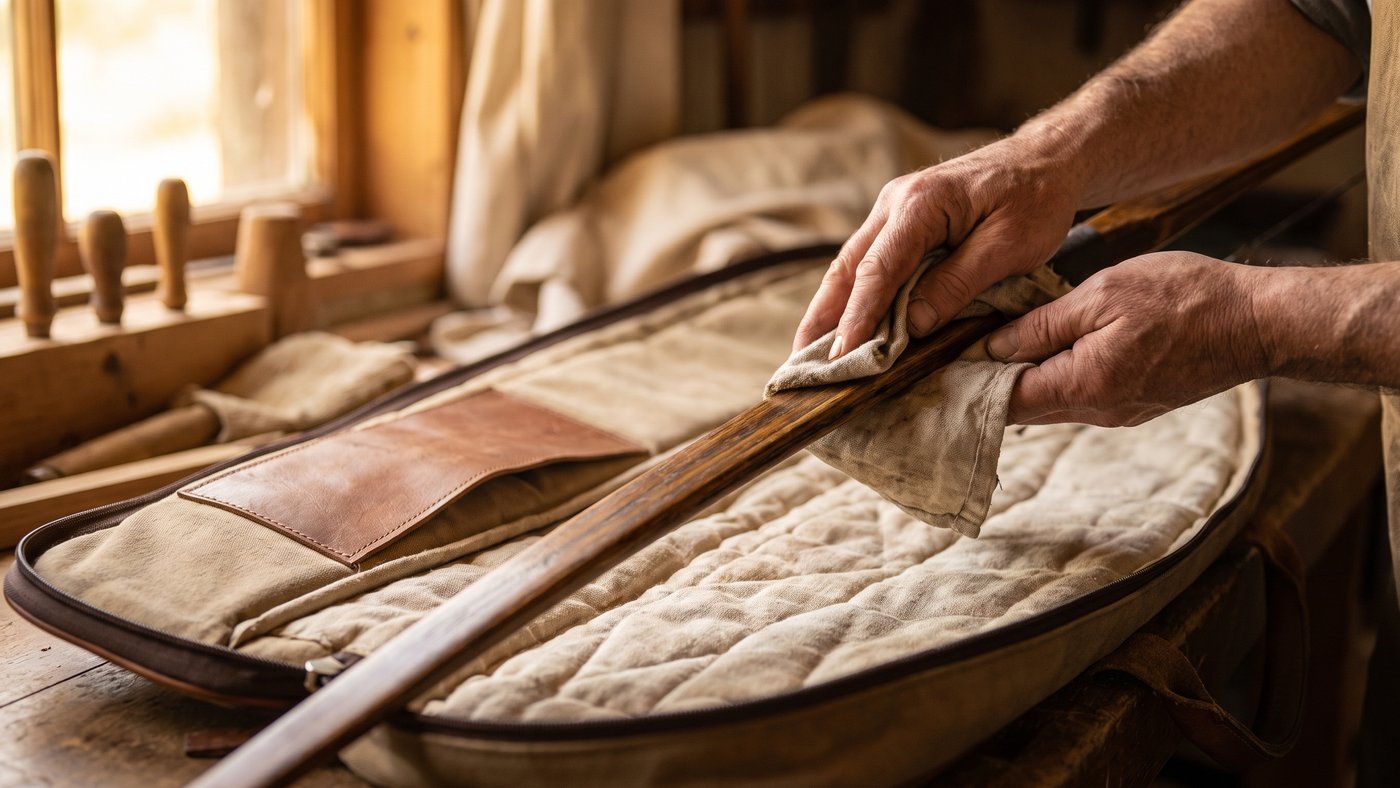
- Wipe the bow down after wet or sweaty sessions; wood and moisture are not friends.
- Once or twice a year, a light rub of a wood-bow finish or paste wax on a self (all-wood) bow keeps moisture out of the belly and back.
- Check the string grooves and tips for cracks or lifting before each session — a failure there is how limbs get damaged.
Do these and a good longbow will outlast the arrows, the target, and probably the car you refused to leave it in. Neglect them and even a fine bow will quietly go soft. The choice, genuinely, is that simple.