How to Make an English Longbow (Yew, D-Section and Warbow Reality)
What separates a true English longbow from a generic wooden bow — the D-section, yew's two-wood trick, and why the historical draw weights are so brutal.
By the Archery Care Editorial Team
An English longbow isn't just a long wooden bow. It's a specific design: taller than the archer, narrow, and deep — with a D-shaped cross-section rather than the flat limbs of an American flatbow. Build it right and the shape does the work. Build a flatbow and call it English and every traditional archer you meet will tell you otherwise.
This is a step up from a board bow. Do that one first.
- 1
Understand why yew
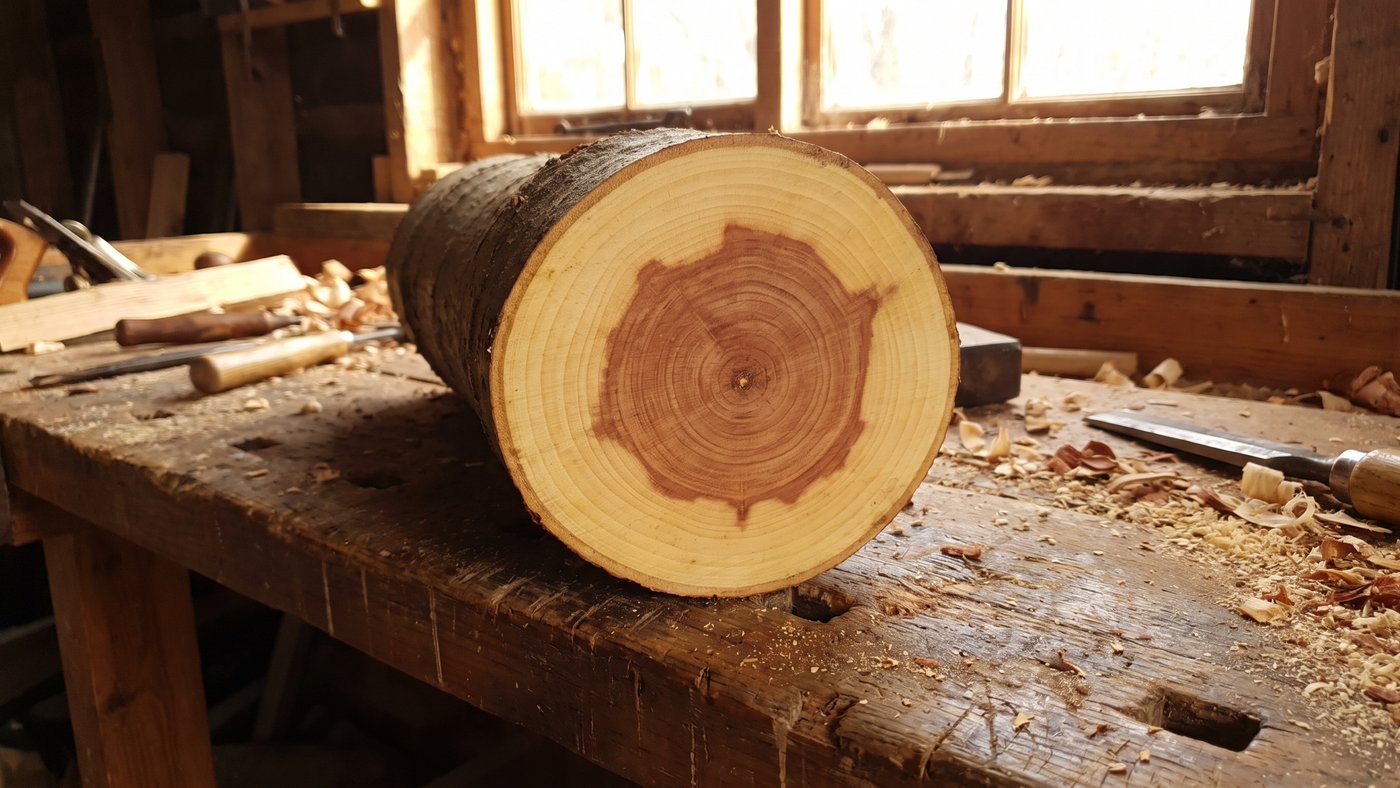
Yew is the classic stave because it is effectively two woods in one. The pale sapwood on the outside resists stretching, and the dense heartwood underneath resists crushing. Leave a thin band of sapwood on the back and heartwood on the belly and you have a natural composite that no single-species wood matches.
Yew staves are expensive and slow to season. Ash, elm and hickory all make honest English-style bows, and a laminated bow with a hickory back over a purpleheart belly mimics the same tension/compression split for a fraction of the cost.
- 2
Get the dimensions right
Length is the defining feature: the bow should stand at least as tall as you, typically 72–78 inches. That length is what lets a stiff, narrow limb bend far enough without taking set.
- Cross-section: deep D — roughly as deep as it is wide, flat on the back, rounded on the belly.
- Width: around 1.25 inches at the handle, tapering steadily to about 0.5 inch at the nocks.
- No cut-out grip and no arrow shelf — you shoot off the knuckle. That is authentic, and it takes practice.
- Slight limb taper the whole way; there is no stiff handle section, the bow bends through the grip.
- 3
Tiller the D-section
Same discipline as any self bow — scrape the belly, never the back, and chase an even arc — but the target shape is different. A proper English longbow bends in a continuous curve from tip to tip, including through the handle. If the middle stays rigid you have built a flatbow with long limbs.
Work slowly. The deep section hides stiff spots that a flat limb would show you immediately.
- 4
Fit horn nocks (or don't pretend)
Traditional bows take cow-horn nocks glued over the tapered tips — they stop the string cutting into the wood and they are the visual signature of the type. Buffalo horn blanks are sold ready to drill.
If you skip them, cut side nocks like any self bow. Just don't call it a warbow reproduction.
- 5
The draw weights are not a myth, and not for you
The bows recovered from the Mary Rose, which sank in 1545, are estimated at roughly 100–185 lb draw weight. Those were shot by men who trained from childhood, and their skeletons show it — thickened left arms and deformed shoulders.
Modern 'warbow' archers do shoot in that range, and they build up to it over years. Start at 45–55 lb. A bow you can't hold at full draw teaches you nothing except how to hurt your shoulder.