Olympic Archery Equipment: The Complete Recurve Kit
Every piece an Olympic recurve archer shoots — riser, limbs, sight, clicker, stabilizers, plunger, tab — what each does, and what it costs to build the setup.
By the Archery Care Editorial Team
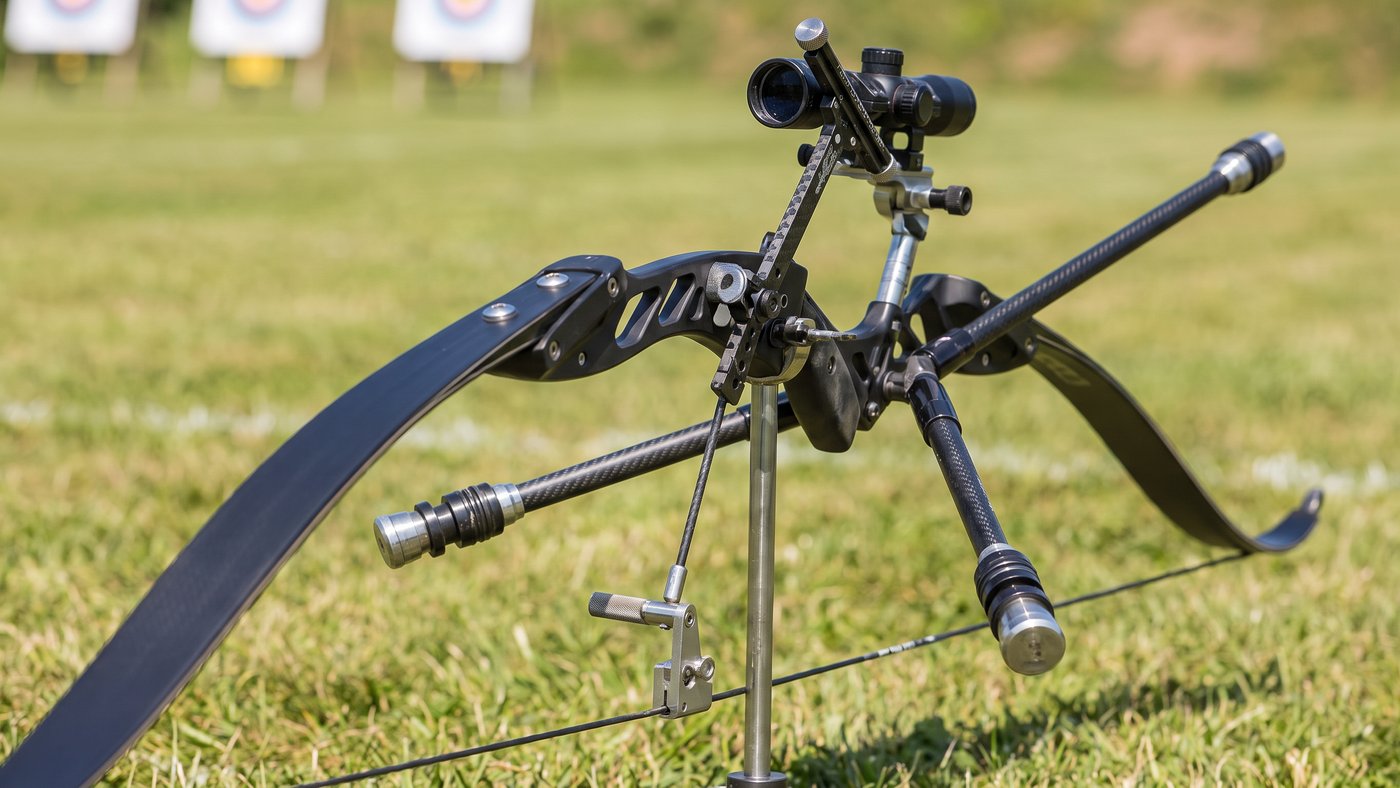
Olympic archery is a recurve discipline, and the bow an Olympian shoots is a very specific machine: a takedown recurve loaded with aiming and stabilizing gear, all of it non-magnifying and mechanical — no lenses, no electronics, no release aid. If you want to shoot the Olympic style, this is the kit, piece by piece, with honest prices.
The bow itself
Part What it does Riser The metal handle, usually machined aluminum. ILF or Formula fitting so limbs interchange. This is where every accessory bolts on. Limbs The interchangeable arms that store the energy. Carbon/foam laminate at the top level; wood/fiberglass to learn on. Swappable to change poundage. Arrow rest A small spring or magnetic arm the arrow sits on — light enough to fold away as the arrow passes. Plunger (button) A spring-loaded pin in the riser that cushions the arrow's sideways flex on release. The single most important tuning component on a recurve. The aiming system
- Sight — an adjustable pin on a bar. No magnification and no lens are allowed, so it's a bare aperture you center on the gold. You dial it up and down for distance.
- Clicker — a thin metal blade the arrow sits under. It falls off the point at your exact draw length and clicks. It's a draw-length alarm, not an aiming device — and learning to release the instant it clicks is half of recurve shooting.
The stabilizers
That spidery arrangement of rods isn't for show. A long rod out the front and two shorter side rods on a V-bar move the bow's balance point forward and down, slowing the natural wobble of your aim and absorbing the shot's vibration. It's why an Olympic bow tips forward gently out of your hand after every arrow — a well-balanced release, not a flourish.
What the archer wears
- Finger tab — a leather pad protecting the three drawing fingers and giving the string a clean, consistent surface to leave from. No release aid exists in recurve; the fingers are the release.
- Arm guard — keeps the string off the bow-arm forearm.
- Chest guard — a light mesh guard that flattens clothing so the string clears the chest cleanly.
The arrows
Elite recurve archers shoot very thin, very consistent carbon or carbon-aluminum shafts — the thinness cuts wind drift over 70 meters, and the consistency is what actually separates a $600 dozen from a $150 dozen. For learning, a mid-tier aluminum or carbon arrow correctly spined to your setup matters far more than the brand on the shaft.
What it costs to build
Honestly? A wide range. A capable club-level Olympic recurve setup — riser, limbs, sight, rest, plunger, basic stabilizers, tab, and a dozen arrows — lands around $400–700 all in. A world-cup setup can run several thousand, almost all of it in the limbs and arrows. The good news for anyone starting: the fitting and the form matter more than the price tag, and ILF gear means you upgrade one piece at a time rather than replacing the whole bow. Our recurve rankings and best recurve brands guide cover the risers and limbs worth building on.