Archery Scoring Explained: Ring Values, Faces, and 3D Rules
A bullseye scores 10 points on World Archery target faces, with rings counting down to 1 and the inner X-ring breaking ties. Here's how indoor, outdoor, and 3D scoring actually work.
By the Archery Care Editorial Team
Watch it done
Reputable tutorials that demonstrate this, hand-picked by Archery Care. The walkthroughs are the creators’ own — we just point you to the good ones (and, where they added chapters, straight to the moment that matters).
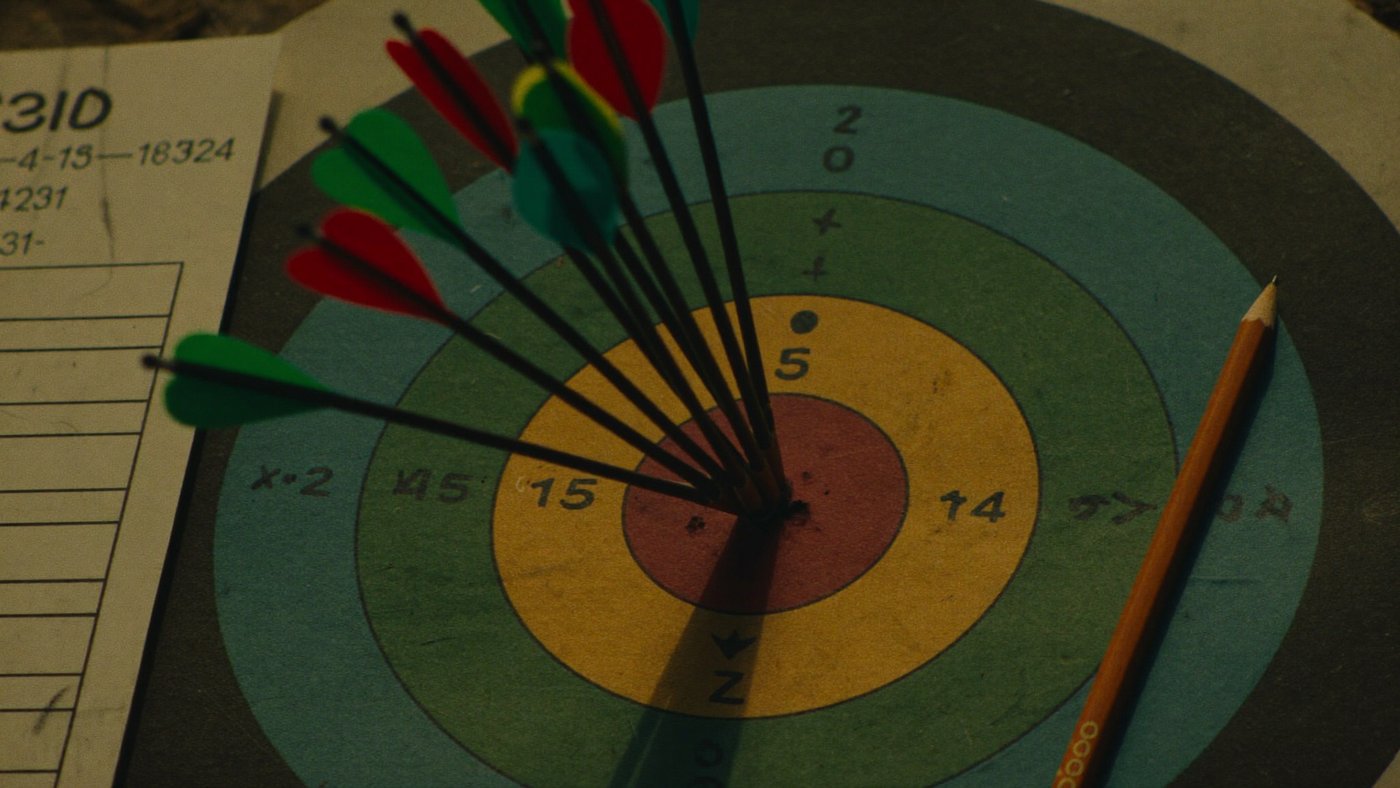
A bullseye scores 10 points. World Archery target faces count down from there in concentric rings — 9, 8, 7, all the way out to 1 at the white edge — and a clean miss goes on the card as an M, worth zero. Inside the gold sits one more circle: the X-ring. It's still a 10, but X count breaks ties in outdoor rankings, and at indoor compound events that inner ring becomes the only 10 on the face.
That's the core of it. The complications — face sizes, end structure, and why 3D courses use completely different numbers — are where archers actually lose points.
Touch a line, take the higher value. If your shaft so much as kisses the divider between the 9 and the 10, you score 10. This line-cutter rule causes more range arguments than anything else in target archery, which is why nobody touches an arrow — or the face — until every score is called and written down.
The strategy difference is real. Chasing an ASA 12 means aiming away from center, so a small miss turns a 10 into an 8. That gamble — plus the unknown yardage many 3D classes shoot — is why arrow speed matters more here than almost anywhere else. The spread across current flagship compounds, from the Bowtech Alliance 30 to the PSE Sicario Carbon FDS, runs roughly 338 to 357 fps IBO, and every bit of that flattens trajectory when you've misjudged a target by two yards.
Ring values on the five-color face
Every standard face uses the same ladder, two rings per color:
- Gold (yellow): 10 and 9
- Red: 8 and 7
- Blue: 6 and 5
- Black: 4 and 3
- White: 2 and 1
Outdoor faces and distances
Recurve archers shoot 70 meters at a 122-centimeter face whose 10-ring measures 12.2 centimeters. That sounds generous on paper. From 70 meters it isn't.
Compound shooters get a shorter, tighter deal: 50 meters at an 80-centimeter face with an 8-centimeter 10-ring. Barebow also shoots 50 meters, but on the full 122-centimeter face — the closest thing the rules offer to mercy.
Indoor scoring at 18 meters
Indoors everything shrinks. The distance drops to 18 meters and the face to 40 centimeters, with a 4-centimeter 10-ring for recurve. Compound archers score only the halved inner ring — 2 centimeters across — as their 10, which is why a clean 600 indoors with a compound is a genuine feat rather than a formality.
Most indoor archers shoot the triple-spot face: three small targets stacked on one boss, one arrow in each, purely to stop arrows smashing into each other. Robin Hoods look great. They also wreck expensive shafts.
Shaft diameter becomes a legal scoring tool here. Fatter arrows cut more lines at 18 meters, while skinny shafts like the Easton X10 exist for the opposite problem — slipping through wind at 70 meters.
Ends, rounds, and matchplay
Outdoor qualification is the 720 round: 72 arrows shot in 12 ends of six, for a maximum of 720 points. Your total seeds you into head-to-head matchplay. Indoor qualification runs 60 arrows in ends of three, topping out at 600.
Matchplay then splits by bow type. Recurve uses the set system — sets of three arrows, two set points for winning a set, one each for a tie, first to six set points wins. A dead-level match goes to a single-arrow shoot-off, closest to center. Compound matches skip the drama and simply total 15 arrows; highest cumulative score takes it.
3D targets run on different math
Walk a 3D course and the colored rings vanish. You're shooting foam animals with scoring zones molded into the vitals — one arrow per target from the stake, usually across a 30-target course — and the two big sanctioning bodies count them differently.
- ASA: rings worth 14, 12, 10, 8, and 5. Two 12-rings sit inside the 10, one high and one low, and the 14 hides in the upper corner of the 8-ring — you have to call it before shooting to claim the points.
- IBO: rings worth 11, 10, 8, and 5, with a single 11-ring dead center inside the 10.
- Both: miss the animal entirely and you score zero.
Make the scorecard work for you
Score everything, even practice ends. Totals hide problems; X counts and arrow-by-arrow records expose them. And let the format steer your setup — line-cutting diameter indoors, slim shafts for outdoor distance, speed and a forgiving rig for foam. The rules reward archers who pick equipment for the face in front of them, not the one in the catalog photo.
Real questions archers ask about archery scoring
Mined from public archery communities (June 2026); answered by Archery Care using our scored data. Source links go to the original discussions.
If my arrow just touches a scoring line, do I get the higher or lower value?
You get the higher value. NFAA, ASA, IBO and World Archery all use the same line-cutter rule: if the shaft touches the line, even by a hair, it scores the better ring. The catch is judging "touching" honestly. Score the arrow as it sits right now, not how it looked sailing in or where you think the line "should" run on a chewed-up foam target. A common trick on the line is to flip a pair of binoculars around and look through the wrong end up close, which magnifies the entry hole like a loupe and settles most arguments. If the group still can't agree, call a judge before anyone pulls arrows.
What happens if my arrow bounces out or passes through a 3D target?
It depends entirely on who's running the shoot, so check the rulebook before you assume. Under ASA, a witnessed bounce-out scores the value of the ring it struck on the way out, so you're not penalized for a fast arrow on a hard target. NFAA traditionally reshoots a witnessed bounce-out. A pass-through gets pushed back and scored by the hole; if it exited through the seam, you're usually capped at 8. Two rules save you here: shoot one arrow at a time so there's no confusion over which hole is yours, and make sure someone actually watched it. An unwitnessed bouncer often scores zero, which is a brutal way to lose points.
Why does the ASA 12-ring rule confuse so many new 3D shooters?
Because ASA puts more than one bonus ring inside the 10, and you have to commit before you shoot. There are two small 12 rings inside the 10. The lower 12 is always live, so a hit there scores 12 automatically. The upper 12 only counts if you "call" it out loud before the shot. Here's the trap: once you call the upper 12 and miss it, anything else inside the 10, including the lower 12, drops to a plain 10. So calling up is a gamble. IBO keeps it simpler with a single inner ring worth 11. There's also the ASA 14, tucked in the upper-back of the 8, but that one's mainly a shoot-off target.
Can a scorecard mistake actually get me disqualified?
Yes, and it catches people every season. The big rule: fix any error before arrows are pulled, get every archer on the bale to initial the change, and never sign a card you haven't checked. Once you sign, the score is yours. Turn in a card with an erased or written-over value that nobody initialed and it can be tossed for an error. Turn in a card that isn't signed by both you and the scorer and it can be tossed for being incomplete. One archer at a World Archery event got DQ'd because the others never told him to initial a correction. Watch the arrow-caller every end and speak up the moment a number looks wrong.
What's the difference between an X and a 10, and when does the X actually matter?
On most outdoor and indoor faces the X is the same physical ring as the inner 10, just marked with an X so it can break ties. You score it as a 10 toward your total, but you also tally your X count separately. If two archers both shoot a 300, the one with more Xs wins. In World Archery compound events the inner ring just is the 10, with no separate X. And watch the format: Lancaster-style indoor rounds score that inner ring as an 11, not a 10, which is why a perfect Lancaster round is 330 instead of 300. So before a shoot, learn which face you're on and whether the center is worth 10, 11, or counts only as a tiebreaker.
Community Pulse
What owners and shoppers actually say, quantified across 6 public discussions reviewed in June 2026.
Line-cutter calls are the most argued-about moment in scoring
mixedEveryone agrees the rule itself is simple: touch the line, take the higher ring. The fights start over what counts as touching, especially on worn paper and rough foam where the printed line frays. Shooters swear by the reversed-binoculars magnifier trick to settle close calls, but plenty argue the real fix is calling a judge before pulling arrows rather than letting the group eyeball it.
3D scoring rules vary too much between ASA, IBO, NFAA and WA
mixedNew 3D shooters get tripped up because the same shot scores differently depending on the sanctioning body. ASA stacks 12s and a 14 with a call-up rule; IBO keeps a single 11; bounce-outs and pass-throughs are handled differently again. Some see the variety as part of each org's character; others think it's needless complexity that costs beginners points until they memorize whose shoot they're at.
Scorecard discipline matters as much as where the arrows land
mixedThere's broad agreement that you protect yourself by watching the arrow-caller, initialing every correction, and never signing a card you haven't verified. The friction is over how harsh DQs feel: a clean shooter can lose a whole day over an uninitialed change or an unsigned card. Some call it fair and non-negotiable; others think the penalties are disproportionate to honest mistakes.
How we counted: we read 6 public discussions across archery forums and communities, grouped recurring topics, and counted distinct threads (not comments) where each theme appeared favorably or critically. Summaries are paraphrased in our own words; every count links to its sources. Note: Discussion concentrates on ArcheryTalk, where the recurring friction points are line-cutter calls, bounce-out/pass-through rules that differ by sanctioning body (NFAA vs ASA vs IBO vs WA), and scorecard-signing disqualifications. TradTalk adds depth on NFAA 300-round and X-count tiebreaker mechanics.