How to Build a Backyard Archery Range (Safe, Legal, Cheap)
Distance, backstops, legality and target choice — how to set up a backyard range that's genuinely safe, neighbor-proof, and costs less than a flagship sight.
By the Archery Care Editorial Team
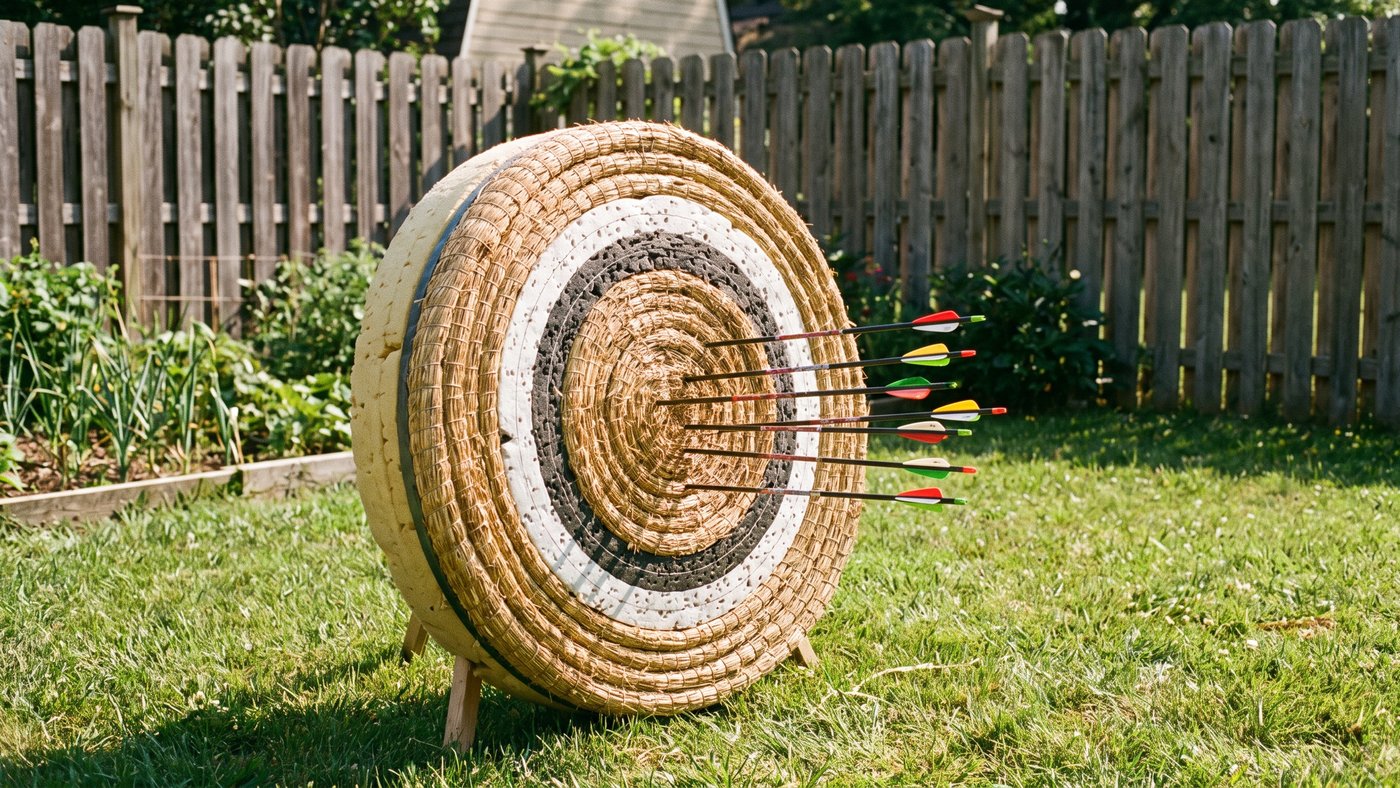
A backyard range is the single best upgrade you can make to your shooting — not because it's glamorous, but because practice you don't have to drive to is practice that actually happens. Building one well takes an afternoon and three decisions: where the arrows fly, what stops them, and what your city has to say about it.
- 1
Check the rules before the tape measure
Municipal codes on backyard archery are wildly inconsistent: plenty of towns allow it outright, some require a minimum lot size or setback from property lines, and some ban discharge entirely — occasionally with bows lumped into 'weapons' ordinances written for firearms. Search your city's municipal code for 'archery' and 'projectile', and call the non-emergency line if it's ambiguous.
Whatever the code says, tell your neighbors before they discover it themselves. An arrow-shaped mystery over the fence line is how legal ranges get banned.
- 2
Lay out the shooting lane
Ten to twenty yards is the honest backyard band — enough for 95% of practice value. Point the lane at the most boring direction you own: never toward a street, path, house or anywhere a person or pet could wander in from the side or behind the target.
The rule that matters most: think in terms of the miss, not the hit. Every range decision assumes the arrow that gets away — because eventually one will.
- 3
Build the backstop (the part people skip)
The target stops good shots. The backstop stops the other kind, and no bare fence qualifies — an arrow laughs at a wooden fence panel.
- Best: a solid earth bank, hillside or berm. Nature's arrow stop, free if your yard slopes.
- Very good: layered horse-stall mats or old conveyor belting hung behind the target with air gap — heavy rubber eats arrows' energy.
- Good: a stack of compressed straw bales two deep, wider and taller than the target by 3+ feet each way.
- Not a backstop: fences, sheds, single plywood sheets, hedges, hope.
Size it generously — a backstop should cover at least 6 feet wide by 6 feet tall behind a backyard target, because misses go wide and high, not just low.
- 4
Pick the target
Field points at backyard distances want a bag target — cheapest stopping per dollar and the easiest arrow removal. Shooting broadheads before season needs foam. Our scored archery target rankings break down the honest options; the short version: a $65 bag covers most people, a foam block earns its keep the day you screw in a broadhead, and everything under $120 lives on our backyard beginner list.
Set the target at chest height on a stand or straw bales — arrows that hit low angle DOWN into dirt, not up over the backstop.
- 5
Range rules, even for one person
- One shooting line, always. Nobody walks downrange while anyone holds a bow.
- Nock only when facing the target; never draw pointing anywhere else — including at the sky (a sky-drawn arrow lands somewhere).
- Pets and kids indoors or behind the line before the first arrow.
- Broadheads only into targets rated for them, and never a first-session experiment.
- Lost an arrow past the backstop? Find it before shooting again. The search discipline is the safety audit.
Total build: a target ($35–160), a backstop ($0–100), and one municipal-code search. Cheaper than a sight upgrade, and worth more to your scores than any gear on this site.