Bow String Wax: When, Why, and How (2-Minute Job)
The cheapest maintenance in archery: what string wax actually does, how often to use it, the fuzz test, and the mistakes that shorten string life.
By the Archery Care Editorial Team
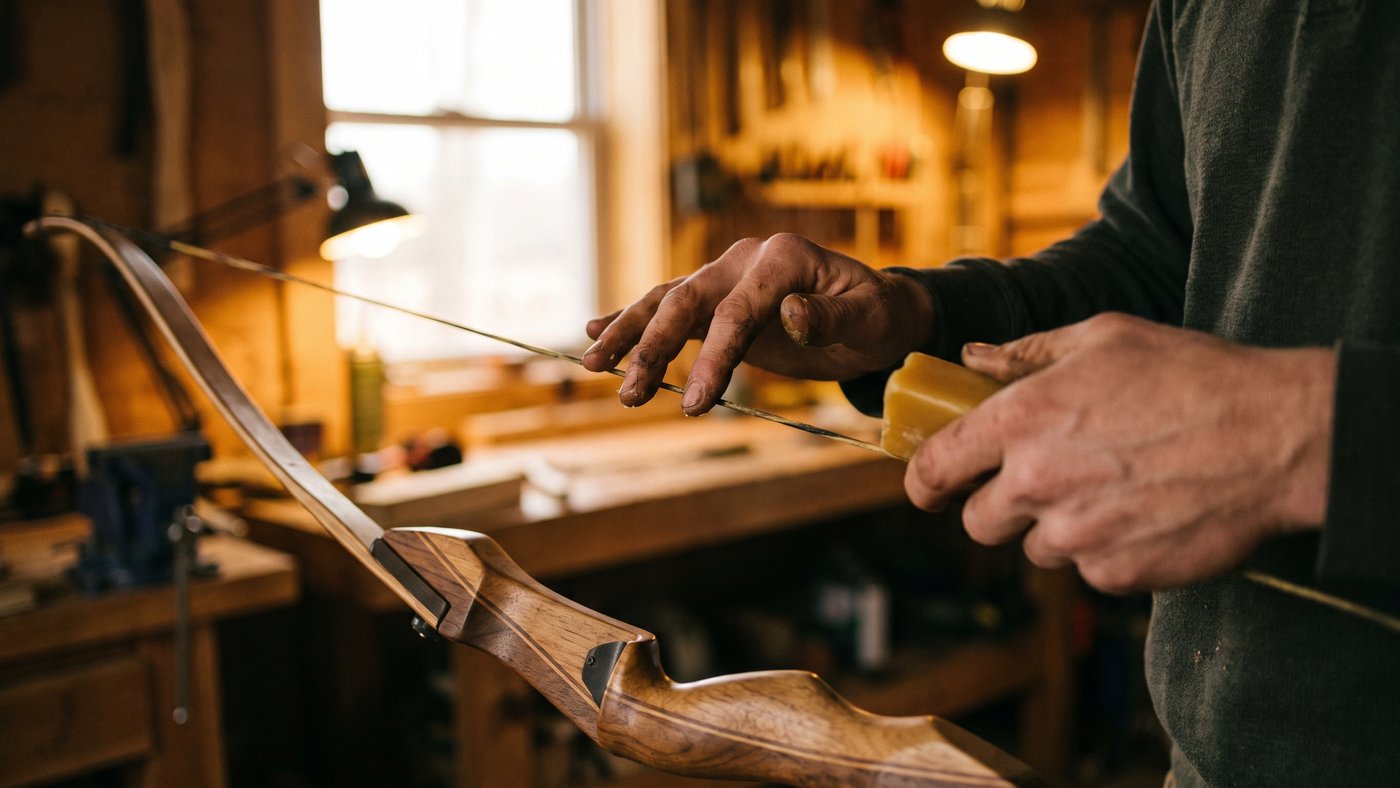
String wax is a $10 stick that doubles the life of a $150 string, and half of archers either never use it or slather it on like sunscreen. The job takes two minutes when you know what you're doing. Here's the whole of it.
- 1
What wax actually does
Modern strings are bundles of tiny synthetic fibers. Wax does three jobs: it keeps those fibers sliding against each other instead of sawing, it seals moisture out (wet strings stretch and misbehave), and it holds the bundle's twist together. An unwaxed string doesn't snap dramatically — it fuzzes, creeps, and quietly loses the consistency your groups depend on.
- 2
The fuzz test — when to wax
Run two fingers up the string. Smooth and slightly tacky: leave it alone. Dry, or showing fuzz — little fiber halos standing off the surface: wax today. Fuzz is fibers starting to abrade, and wax laid over it smooths them back into the bundle.
Typical cadence lands every two to four weeks for regular shooters, more often for hunters living in rain and brush, less for a garage-kept target rig. The string tells you; the calendar is just a reminder.
- 3
How to do it right
- Rub the wax stick lightly along the string's strands — a thin film, not frosting.
- Work it in with bare fingers: friction melts the wax between strands where it belongs. Stop when the string looks satin, not shiny.
- Pinch off excess with a loop of serving thread or a leather scrap slid down the string.
- SKIP the servings — the wrapped areas at the loops, nocking point and cam contact. Wax attracts grit that chews serving thread, and slick center serving moves your nocking point.
- Compound shooters: wax the string and exposed cable lengths, not where cables cross rollers or slides.
- 4
The three mistakes
Too much wax collects dust and grit until the string carries an abrasive paste — the opposite of protection. Waxing over dirt does the same, so wipe the string with a dry cloth first when it's been in the field. And no household substitutes: candle wax cracks, chapstick and oils soak in and attract everything. Real string wax is silicone- or beeswax-based, costs about the same as a fancy coffee, and one stick lasts a couple of years.
When wax stops helping — fuzz that returns in days, visible broken strands, serving separation — the string is done, not thirsty. That's replacement territory, and our bowstring rankings cover exactly that decision.