How to Set Up a New Bow From the Box
Installing a rest, sight, stabiliser, peep and D-loop, then setting nocking point and centershot — and knowing when to visit a pro shop.
By the Archery Care Editorial Team
Watch it done
Reputable tutorials that demonstrate this, hand-picked by Archery Care. The walkthroughs are the creators’ own — we just point you to the good ones (and, where they added chapters, straight to the moment that matters).
If you've bought a bare or partially-built bow, here's the order of operations to get it shooting.
- 1
Install the accessories
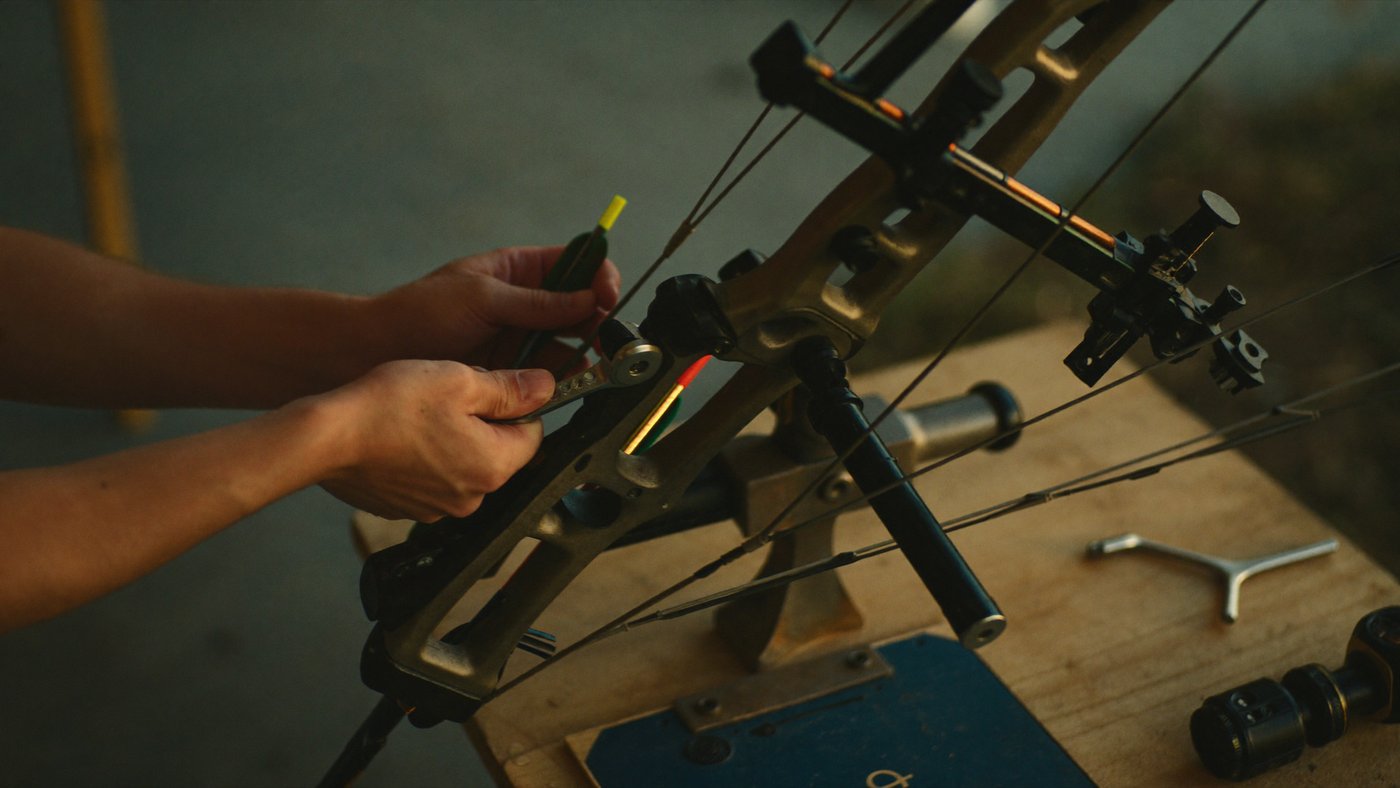
- Mount the arrow rest, sight, stabiliser, peep sight and tie in a D-loop.
- Set the nocking point square and the centershot to the manufacturer's starting spec.
- 2
Set draw length and weight
On a compound, set the draw length (often via modules or rotating cams) to your verified number, then set draw weight with the limb bolts. Never back limb bolts out past the manufacturer's minimum.
- 3
Initial paper tune
Do a basic paper tune to get clean arrow flight, then sight in. Anything that needs a bow press — installing a peep, changing the string, cam work — is best done at a pro shop unless you have the right tools and experience.
Real questions archers ask about setting up a compound bow
Mined from public archery communities (June 2026); answered by Archery Care using our scored data. Source links go to the original discussions.
Does a brand-new bow actually need tuning, or is it set up at the factory?
Plenty of new bows ship close to spec, but "close" isn't "shootable." The factory sets axle-to-axle, brace height and a rough center shot, then the bow sits in a box and gets handled by a shop. What it does not have is your draw length, your rest height, a nocking point, a peep, or a tune to your arrows. Verify the basics with calipers and a draw board before you trust them, because timing drifts during shipping and limb-bolt tweaks. Treat the factory numbers as a starting point, shoot it in, then re-check timing and center shot. The bow leaves the factory as a kit, not as your bow.
What order should I do the setup steps in so I'm not redoing work?
Sequence saves you from chasing your tail. Get the bow to factory spec first: confirm axle-to-axle, brace height and cam timing on a draw board before anything else. Then set draw length, mount the rest at roughly 13/16" center shot, and set the rest height square through the Berger hole. Tie your nocking point, then the D-loop, then sink the peep. Shoot 20-30 arrows to seat the string, re-check timing, then paper tune and fine-tune the loop and peep rotation. Sight in last. The classic mistake is sighting in before tuning, then watching every pin move once the arrow flies straight.
How many shots does it take to break in a new string before I lock in my tune?
Most shooters land between 20 and 100 shots. The reason a fresh string moves isn't dramatic stretch, it's the served sections settling into the cam grooves and the loops snugging onto the posts. Modern materials at high strand counts barely creep, so don't obsess over it. A practical routine: draw firmly to the wall a handful of times to seat everything, fire 20-30 arrows, then re-check timing, peep rotation and nocking-point height. If your point of impact or peep alignment has wandered, you caught it before it cost you a sight-in. Lock the tune in after the bow has stopped shifting, not on day one out of the box.
What's the minimum tool kit if I want to set the bow up myself instead of paying a shop?
You can do a surprising amount with a few cheap items, but full control needs a press. The non-negotiables: a bow square for nocking point, an Allen set for limb bolts and accessories, a hand-held scale to verify real draw weight, and a level. To check cam timing properly you want a draw board, and to twist cables or change strings safely you need a bow press. Don't cheap out on the press; a flimsy one is genuinely dangerous under that much stored energy. If you're not ready for a press yet, a shop can handle timing and string work while you do rest, loop, peep and sight-in at home.
My draw length shortened after I cranked up the poundage — what happened?
That's normal, not a defect. As you tighten the limb bolts to add weight, the geometry shifts slightly and most bows lose a hair of draw length at the same time. It also throws timing off a touch, which is why you re-check timing every time you turn the bolts more than a rotation or two. Set your poundage first, confirm the cams hit the stops together on a draw board, then measure draw length and adjust. If you need to recover that lost length, micro-tweak the D-loop or use the cam's draw-length module. Don't set your loop and peep until the weight is finalized, or you'll be retying both.
Community Pulse
What owners and shoppers actually say, quantified across 6 public discussions reviewed in June 2026.
For your first compound, a pro shop should do the initial setup while you watch
mixedOne camp says a brand-new owner has too much to learn at once, and the best move is paying a shop to set the bow up as a walk-through seminar. The other camp argues tuning is straightforward, the info is everywhere, and once you've done it a few times you'll never trust anyone else with your bow. The honest middle ground that keeps coming up: let a shop handle press-dependent work first, then take over the rest yourself.
String break-in still matters before you finalize the tune
mixedTraditionalists insist on seating a new string with firm draws and a few dozen shots before locking timing and peep rotation, because the cables are still finding their home in the cam grooves. Skeptics counter that modern low-stretch materials at high strand counts barely move, so the old break-in ritual is mostly habit. Both sides agree on the safe play: shoot it in, then re-check timing and impact before you sight in.
Set the bow to factory spec and timing before touching arrow tuning
praiseThis is about as close to consensus as a bow forum gets. Confirm axle-to-axle, brace height and cam timing on a draw board first, set center shot to factory, then move to nocking point, paper and broadhead tuning. Skipping the spec check and jumping straight to paper tuning is the number-one source of frustration people report, because you end up tuning around a problem the cams created.
How we counted: we read 6 public discussions across archery forums and communities, grouped recurring topics, and counted distinct threads (not comments) where each theme appeared favorably or critically. Summaries are paraphrased in our own words; every count links to its sources. Note: Setup discussion concentrates on ArcheryTalk and Rokslide; the loudest debates are DIY-vs-pro-shop and whether a new bow really needs re-tuning out of the box. TradTalk skews trad/recurve so it offered little on compounds and was not cited.