How to Start Archery: The First 90 Days, Honestly
The realistic path from never-shot to competent: your first lesson, what to buy (and not buy), what it costs, and the 90-day plan that skips the common mistakes.
By the Archery Care Editorial Team
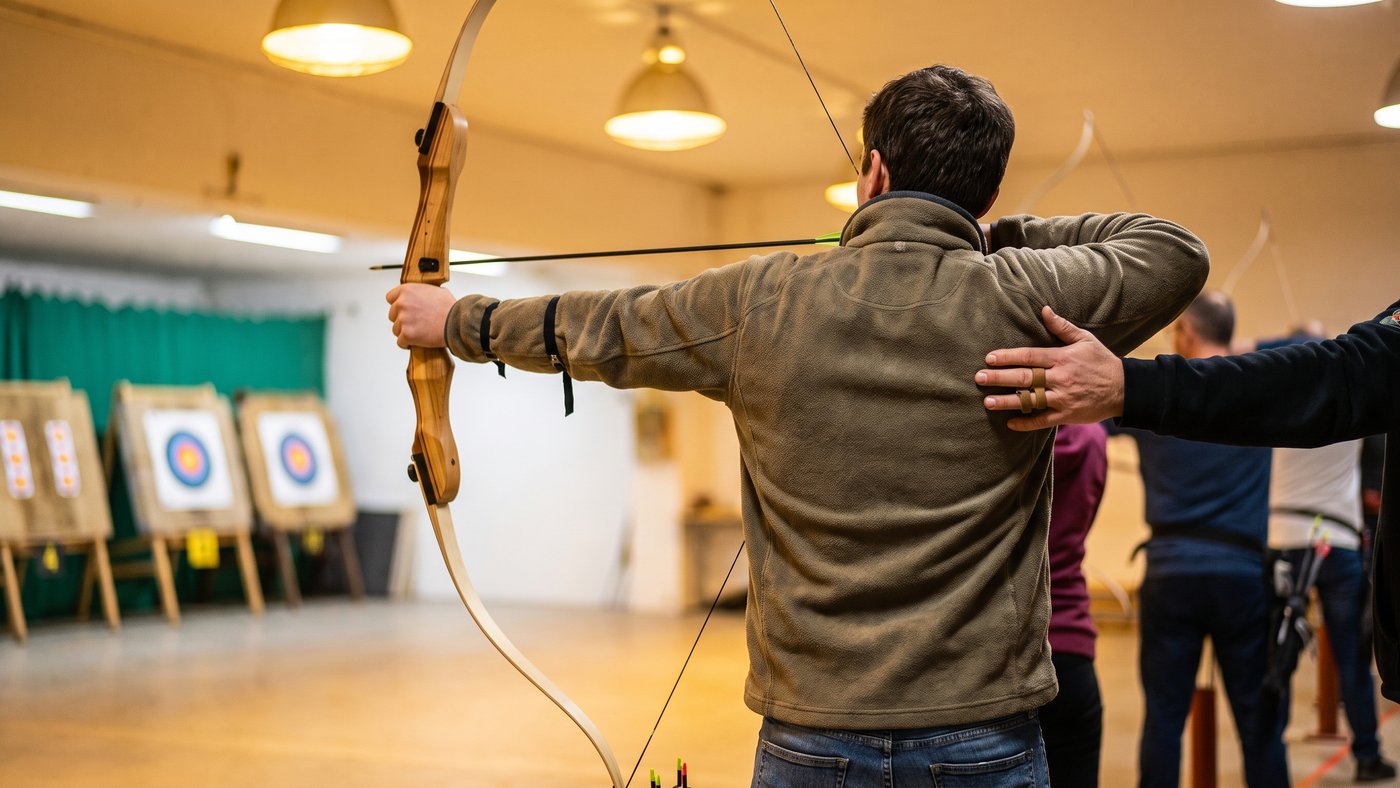
Here's the thing nobody tells beginners: archery is easy to start badly. Buy a bow first, teach yourself off videos, and you'll spend a year unlearning a flinch. Start the right way and you'll be putting arrows in a paper plate at 20 yards inside three months. The right way costs less, too.
- 1
Take one real lesson before buying anything
Find a range or club and book an intro session — most run $20–50 with all equipment included. One hour with a coach settles the three things you can't Google: your eye dominance (which decides right- or left-handed shooting, and it's not the same as your writing hand), your rough draw length, and whether your shoulders can handle the draw weight you're imagining. They can't, by the way. Everyone starts too heavy.
Club archers are also the friendliest gear nerds alive. Shoot their loaner bows for a session or two and you'll know what you actually like before spending a dollar.
- 2
Choose your lane
Three honest paths, and our recurve-vs-compound guide goes deeper:
- Recurve — the Olympic path and the purest teacher of form. Cheapest entry, steepest skill curve, and ILF gear grows with you instead of getting replaced.
- Compound — cams and let-off make aiming dramatically easier, day one. The path for bowhunting or tight-group satisfaction. More gear, more tuning.
- Traditional/longbow — no sights, pure instinct. The most romantic and the most humbling. Best as a second discipline, honestly.
- 3
Buy the boring starter kit
The whole trick of buying first gear: spend on fit, not features. A first setup that fits beats a flagship that doesn't, every time.
- Recurve: a takedown around 20–25 lb draw weight (yes, that light — form first), a dozen properly spined arrows, tab, arm guard, stringer. Roughly $200–300 all in.
- Compound: a ready-to-hunt adjustable package around 40–50 lb, a release, arrows. Our budget compound rankings cover the honest options at $400–650.
- Everyone: a target. A $35–65 bag target handles field points for years — see our archery target rankings for the backyard picks.
- Skip for now: stabilizer upgrades, expensive sights, broadheads, and anything called 'pro'. They solve problems you don't have yet.
- 4
The 90-day plan
Frequency beats volume. Twenty good arrows three times a week outbuilds two hundred on Saturday.
- Weeks 1–4: form only, 10 yards, big target face. Anchor, back tension, follow-through. Score nothing.
- Weeks 5–8: stretch to 15–20 yards. Start each session with two blank-bale ends (eyes closed, close range, pure feel).
- Weeks 9–12: introduce scoring pressure gently — games, a friend, a club night. Watch what pressure does to your release, and go fix it at the bale.
- Throughout: video yourself monthly from behind and side-on. The camera coaches for free.
- 5
Avoid the five classic mistakes
- Starting too heavy. Overbowed archers learn to flinch, not to shoot. You can add draw weight in a month; unlearning a flinch takes a year.
- Buying before fitting. Draw length and eye dominance first, wallet second.
- Chasing distance. 40 yards with bad form is practicing bad form, further away.
- Solo learning. One coached session a month keeps a hundred solo sessions honest.
- Gear-solving form problems. If groups wander, the answer is almost never in a catalog.
Ninety days from now you'll either have a hobby or an obsession. Fair warning: it's usually the second one.