Every longbow below is scored by our proprietary CareScore™ system — a transparent, quantitative model that weighs the specs that actually decide real-world performance. We don't take the manufacturer's word for what's best; the data ranks them.
The short answer
The best longbow of 2026 is the Southwest Archery Scorpion 68" Longbow with a CareScore of 76.1/100 at $249, ahead of the Galaxy Archery Sage Longbow (69.3).
Size from draw length, not height. Two people the same height can draw three inches apart. The chart, stacking, and English-versus-hybrid notes live in the size guide — this page does not reprint them. Open the longbow size guide
How to choose
CareScore on this page ranks published construction, length, draw-weight range, mass, and price. It does not pick a shape for you. Decide hybrid versus a straight D-bow, then length, then weight — the board compares the bows that already fit those three calls.
A hybrid (reflex/deflex) sweeps the riser toward you and the limb tips away. That pre-load stores more energy and cuts hand shock versus a straight D-profile at the same marked weight — it is the construction lever CareScore already rewards. A straight D-bow is the classic 68-inch backyard feel: long, smooth, and honest about stacking if you out-draw it. English longbows are a third thing — deep D-section, usually your height plus a hand — and they are not the laminated American flats and hybrids on this board.
Length follows draw, not height. A 28-inch draw usually wants 68–70 inches on a straight D-bow; hybrids forgive sitting a size short because the string angle stays friendlier. Hunting from a stand or a blind is why the 60–62 inch hybrids exist: they clear brush and a treestand rail. A 68-inch D-bow is the calmer backyard and target bow. Slightly long is smooth; slightly short stacks.
Start at 25–35 lb. There is no let-off — your fingers hold every pound. Most states want 40 lb for deer; 50–60 lb is the elk-and-up band, and it comes after the shot is clean, not before. Lines that open at 25 lb exist so a first longbow does not become a form problem.
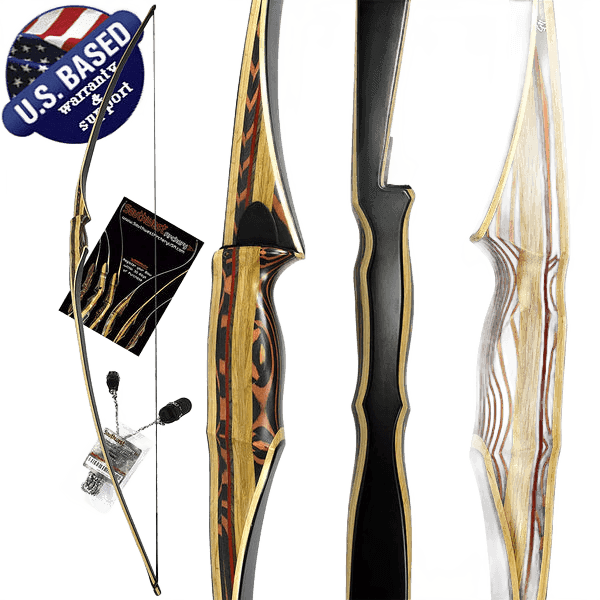
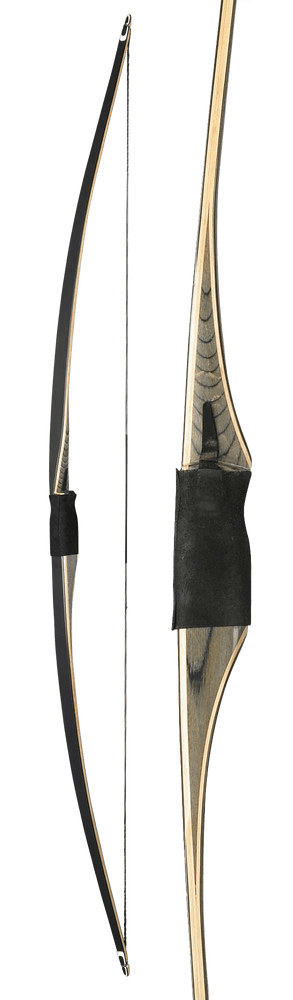
Southwest Archery's only one-piece longbow borrows the dymondwood, tiger wood, white oak, and padouk mix from its Tigershark recurves, and it's easily the best-looking riser under $250. Reinforced tips mean it'll take a Fast Flight string, and the box includes a stringer, rest, and actual instructions. One real problem: when we checked in June 2026, all sixteen draw-weight and hand variants were sold out at the manufacturer.
Price
$249
Build
One-piece-laminated
Length
68"
Min draw
25 lb
Widest entry-level draw range here: 25 to 60 lbs, both hands Reinforced tips rated for Fast Flight and Flemish strings
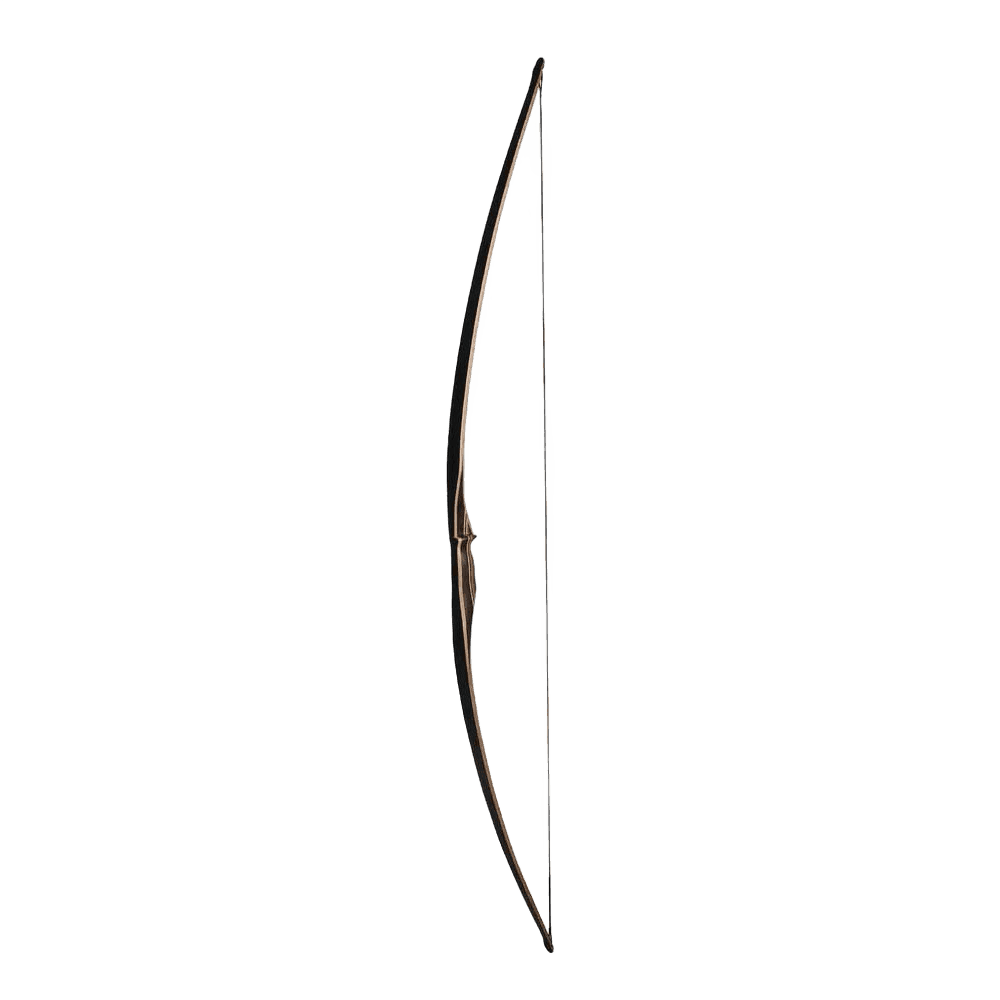
Lancaster's house brand took the Sage name everyone knows from the recurve world and put it on a 68-inch one-piece longbow. Dymondwood, hard maple, and oak under black fiberglass, phenolic-reinforced tips, and a crowned shelf. At $229.99 and 1.23 pounds on the scale, it does exactly what a first longbow should: teaches you to shoot a stick without emptying your wallet.
Price
$229.99
Build
One-piece-laminated
Length
68"
Min draw
30 lb
Published mass weight (1.23 lbs) — rare honesty at this price point Phenolic-reinforced limb tips on a $230 bow
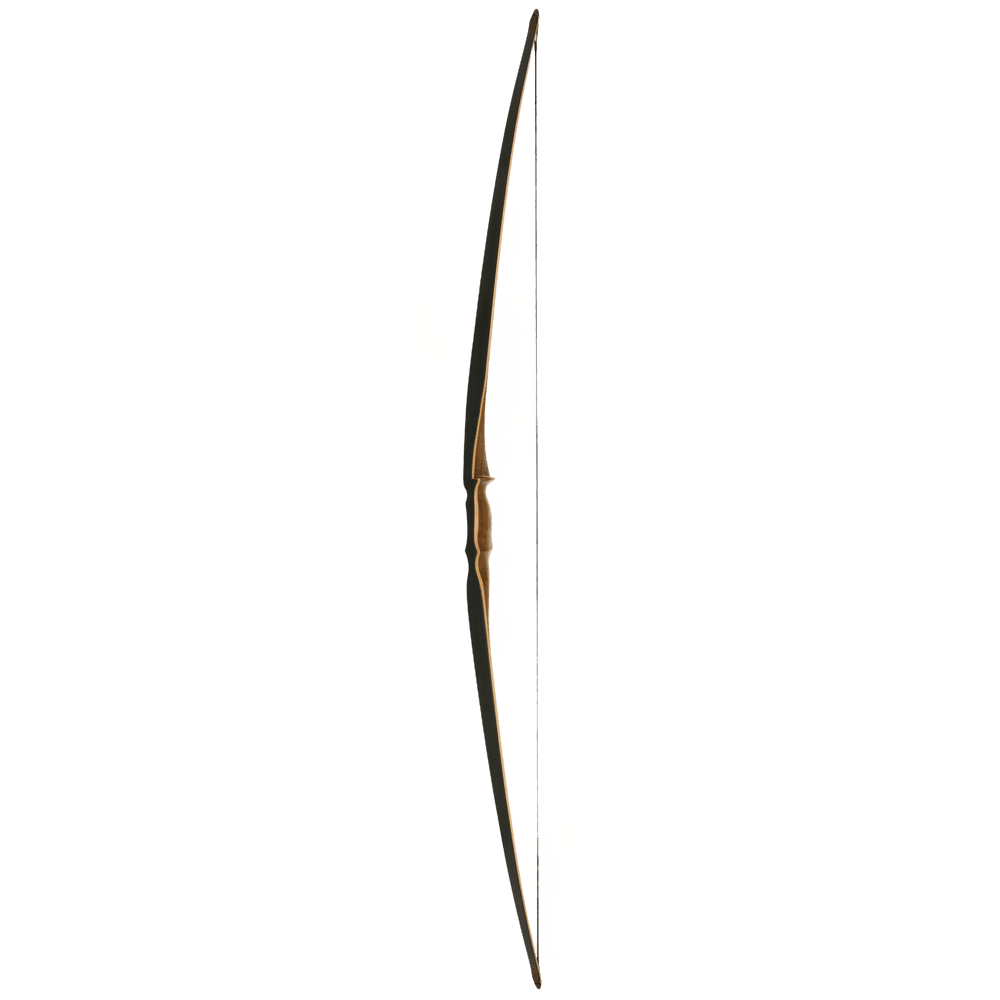
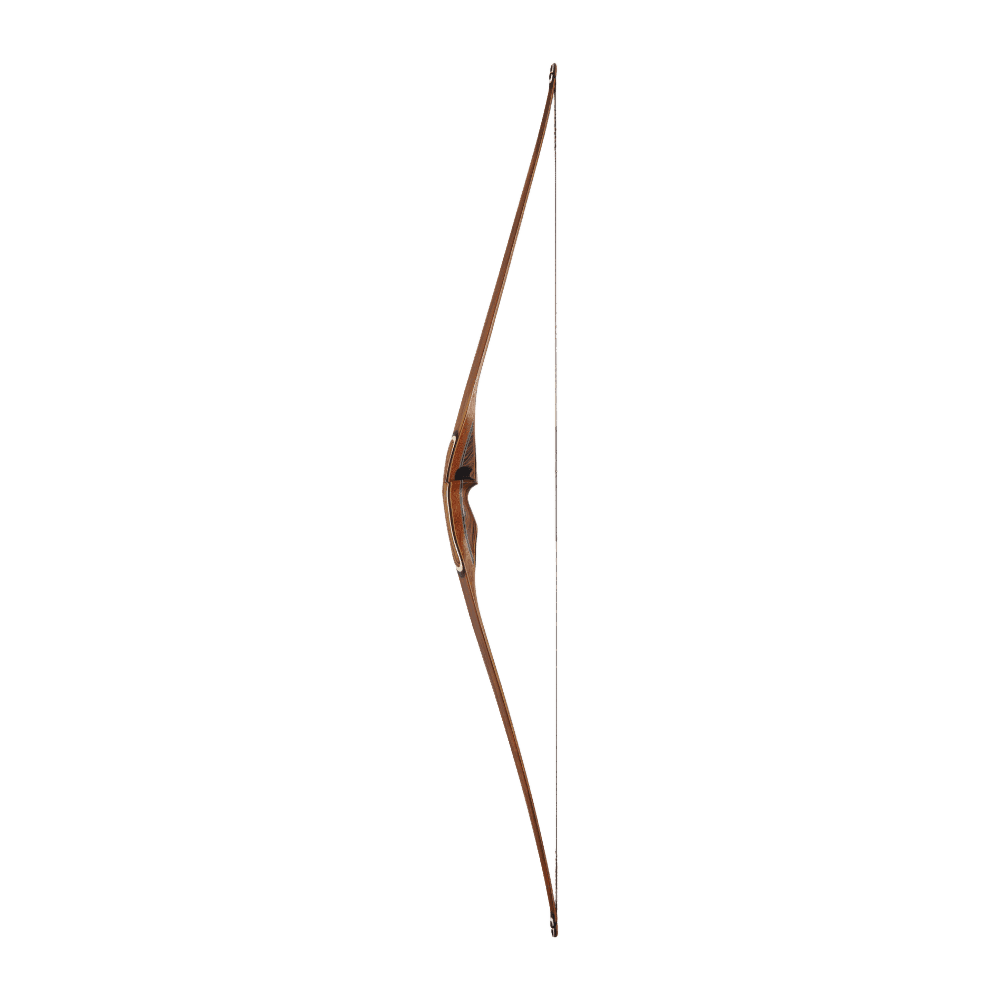
OMP's 68-inch workhorse in hard maple and walnut, with a multi-laminate handle, reinforced tips, and Fast Flight compatibility. MSRP says $279.99 but nobody pays that — Bowhunters Superstore had it at $193 to $207 depending on weight when we checked. The 8 to 8¾ inch recommended brace is unusually tall for a longbow, which quiets it down at the cost of a little speed.
Price
$192.99
Build
One-piece-laminated
Length
68"
Min draw
35 lb
Street price of $192.99-$206.99, a third off the $279.99 MSRP Fast Flight compatible reinforced tips at a budget price
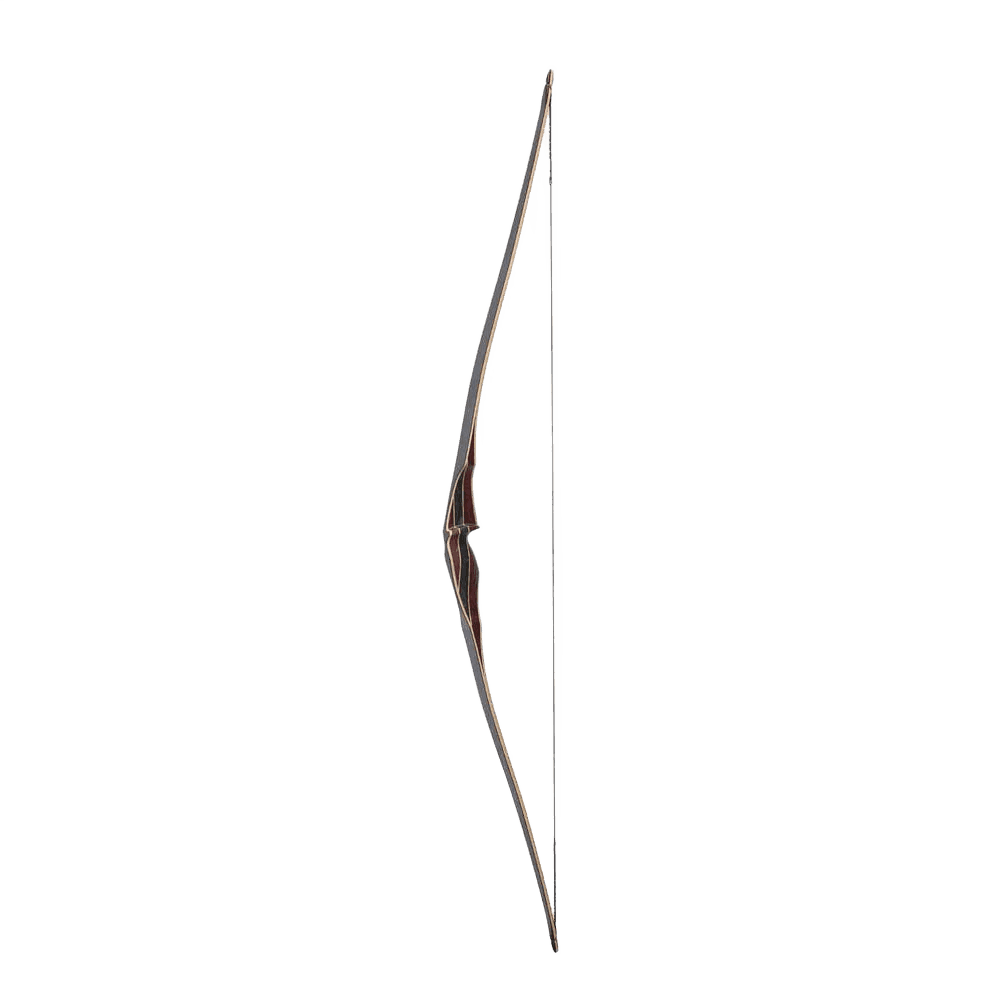
The shortest and cheapest bow in this group, and arguably the most interesting. The Black Ridge 62 is a one-piece hybrid with a deflex profile, hard maple core laminations, phenolic tips, and satin black glass. At 62 inches it's the only entry-level longbow here that won't fight you in a treestand or a ground blind, and the hybrid geometry means less hand shock than the 68-inch D-bows it undercuts on price.
Price
$209.99
Build
Hybrid-reflex-deflex
Length
62"
Min draw
30 lb
Cheapest bow in the category at $209.99 62-inch length suits blinds, stands, and shorter archers
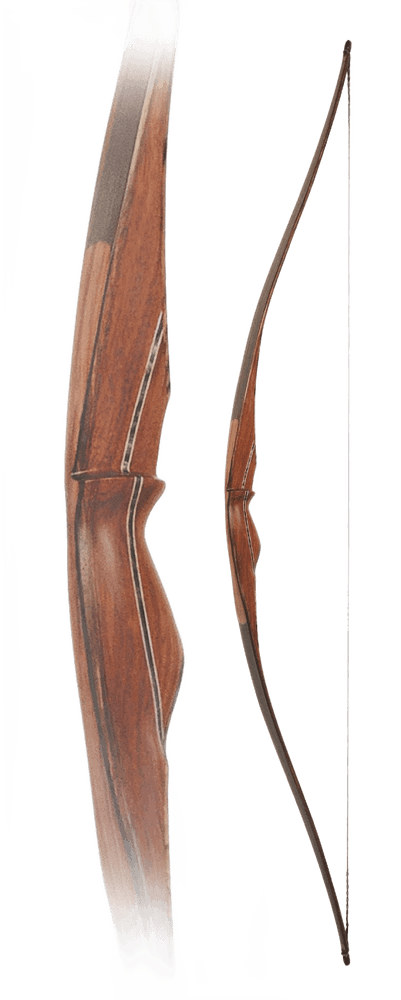
The Montana's been Bear's longbow since the late '90s, and it hasn't changed much because it hasn't needed to. You get a hard-rock maple riser, white maple limbs under black fiberglass, a mild reflex profile, and a leather-wrapped grip with a leather shelf rest. At $529.99 it costs roughly double the import D-bows, but it ships with a D97 Flemish string and it's the only bow in this group you can buy off the shelf in almost any weight, right now.
Price
$529.99
Build
One-piece-laminated
Length
64"
Min draw
30 lb
Slight reflex and tapered limbs take the sting out of the draw compared to a straight D-profile Ships with a D97 Flemish-twist string — no day-one upgrade needed
Henry Bodnik's 60-inch hybrid is the hot rod of this group: bamboo limb cores with a carbon layer under crystal-clear glass, a Merbau and Makassar riser, multilayered Mycarta tips, and a low pistol grip. It's built in Germany, carries a 30-year warranty, and at 60 inches it draws and hits like bows half a foot longer. US street price is $699 at Kustom King; ordering direct from Bearpaw runs $798 and the direct listing was sold out when we checked.
Price
$699
Build
Hybrid-reflex-deflex
Length
60"
Min draw
25 lb
Carbon-and-bamboo limbs in a 60-inch package that's genuinely quick 30-year Bodnik Bows warranty
The Savannah is the bow trad hunters point to when they explain why reflex/deflex matters. Built in the Damon Howatt facility in Walla Walla, it's 62 inches, weighs a scant 1 lb 1 oz, and pulls 40 to 65 pounds. The r/d profile stores energy without the wrist-slap of a straight D-bow. It's $825 with a straight inlay, $875 curved, and you don't buy one off a shelf anymore — you reserve a build slot and wait five to seven weeks.
Price
$825
Build
Hybrid-reflex-deflex
Length
62"
Min draw
40 lb
Reflex/deflex profile that defined the genre — fast, quiet, minimal hand shock Lightest published mass weight in the category at 1.06 lbs
A recurve is a little faster and most beginner kits are takedown recurves with swappable limbs — that is the practical default. Choose the longbow if the draw itself is the point: a 68-inch D-profile is smoother than a short recurve at the same weight, and there is less to tinker with. Either way, buy light.
What is the difference between an English longbow and a hybrid?
An English longbow is a deep D-section stave, usually as tall as you plus a hand, and it wants even more length than the American chart. An American flatbow is wide and thin. A hybrid adds reflex/deflex so it behaves more like a mild recurve — more speed, less wrist slap. This list is American flats and hybrids, not English warbows.
Why do people say a longer longbow is safer?
Stacking. Draw a straight-limbed bow past its design and the last inches pile on — an extra pound per inch becomes three, then five. That wall wrecks the release and makes you creep short. A longer bow keeps the string angle friendly at your draw. Slightly long is smooth; slightly short is a fight.
How long should a longbow string be?
About three inches under the bow's AMO length. A 68-inch longbow takes a 65-inch string; a 68-inch recurve takes about 64. Measure the bow unstrung, groove to groove along the face. Do not size from a worn string — it has already crept. The care and setup guide covers stringing it with a stringer.
When does a 62-inch hybrid beat a 68-inch D-bow?
When the bow has to move in a blind, a stand, or thick timber, or when your draw is on the short side of average. Hybrid geometry keeps a 60–62 inch bow from stacking as early as a straight 62-inch D-profile would. The 68-inch D-bow still wins the backyard: smoother, more forgiving of a sloppy release. CareScore gives length some weight, so the long D-bows look calmer on this board; that is not the same as better in a treestand.
Should I unstring a longbow after shooting?
Yes for wood. A wood longbow left strung takes a set and loses cast. Glass-laminate bows are more tolerant for a day, but unstrung is never wrong. The care and setup guide is the habit list — stringer, storage, travel.